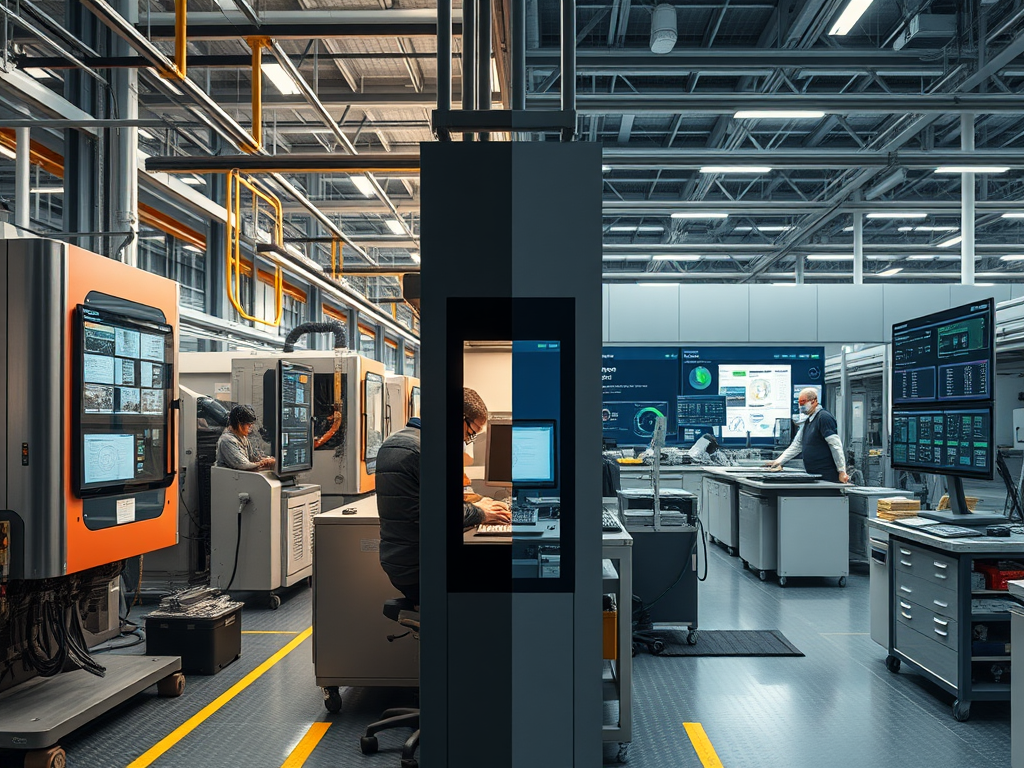
Let’s cut to the chase: SAP Digital Manufacturing (DM, sometimes called DMC for “Cloud”) is not a direct, drop-in replacement for SAP Manufacturing Integration and Intelligence (MII). I’ve spent much of the last few years helping global manufacturers figure this out, and I’ve lived through the pain, the hope, and the reality checks. Here’s what I’ve seen, learned, and would tell anyone facing the same question.
Why This Question Matters Now
For a long time, SAP MII was the backbone for connecting plant equipment, MES, and ERP. It handled everything from machine data collection, custom workflows, and label printing, to acting as the glue between old PLCs and shiny new cloud dashboards. But SAP announced they’re sunsetting MII: feature freeze by 2027, end of support by 2030. That’s not far away, and it’s forcing everyone to rethink their plant connectivity stack.
So, is SAP DM the answer? Well, yes and no.
What SAP DM Brings to the Table
SAP Digital Manufacturing is SAP’s cloud-native MES and shopfloor platform. It has a lot of modern features out-of-the-box:
- Core MES functions: Standard work instructions, operator dashboards (POD), time tracking, and production order management.
- Production Process Designer (PPD): Drag-and-drop workflow builder, similar in spirit to MII transactions but laid out in a BPM (workflow) style. You can automate things like component assembly, PLC integration (via Production Connector, which replaces SAP PCo), and call APIs from third-party systems.
- POD Designer: Low-code/no-code screens for operators, with options for custom plug-ins.
- Integration Suite (CPI): Bridges between on-premise and cloud, handles data transformations and orchestrations.
- Analytics: OEE reports, genealogy, dashboards (including SAP Analytics Cloud), and export APIs for external analytics.
- Resource Orchestration: Real-time scheduling for labor and equipment.
- Support for process-industry workflows: Weigh-and-dispense, label printing, and more.
All this is delivered in the cloud, with the promise of faster updates, less on-premise infrastructure, and easier integration with SAP’s broader Business Technology Platform (BTP).
The Big Differences: Flexibility, Customization, and Architecture
Here’s where things get real. MII was (and still is) a developer’s playground. You could write custom logic, build integrations to almost anything, and create operator screens to match any process—no matter how weird or site-specific. It was a toolkit, not just a product.
With SAP DM, you get more standardization, but less flexibility. You’re expected to fit your process into SAP’s templates and workflows. Customization is possible, but it’s mostly via configuration, low-code tools, or (if you really need it) by building add-ons in BTP. The days of deep, Java-based custom logic running on-premise are pretty much over.
Some of the main technical and practical gaps I’ve seen:
- Customization: DM does not offer the same level of deep customization as MII. If your process or integration is unique, you’ll need to either simplify, use BTP for custom apps, or keep a hybrid setup.
- Edge Readiness: DM’s edge solution (for on-premise data collection and processing) is still evolving. In my experience, it’s not as robust or flexible as MII+PCo, especially for complex, high-frequency, or regulated environments.
- Integration: While DM can call MII transactions (for now), a full migration means rethinking how you handle machine data, event processing, and orchestration. You’ll need to rebuild or redesign many MII “transactions” as DM workflows or external microservices.
- Frequent Updates: Cloud updates are great for security and features, but they require constant re-testing of integrations and custom logic—something many manufacturers aren’t set up for.
- Labeling and Weigh-and-Dispense: These features exist in DM, but with different limits and integration points than in MII. Some use cases still hit snags.
Real-World Migration: Lessons Learned
I’ve worked on several migrations (and some “should we migrate?” studies) at global manufacturers. Here’s what I’ve seen work—and not work:
- Don’t expect a like-for-like replacement. If you try to “port” MII logic and screens directly to DM, you’ll hit roadblocks. It’s better to see this as a chance to modernize, simplify, and standardize wherever possible.
- Plan for a hybrid period. Most companies end up running MII and DM side-by-side for years. Some keep MII for edge integration and use DM for MES and analytics. Others move everything to cloud-native platforms (not always SAP).
- Resource and compliance challenges. For regulated sites (think food or pharma), every change needs validation. Cloud updates, new integrations, and even minor UI tweaks trigger re-testing and re-validation. This is a real cost and risk.
- Skillsets. Your old MII developers may need to learn new tools, languages, and cloud architectures. Don’t underestimate the learning curve.
The Roadmap: End-of-Life and What’s Next
SAP’s official word is clear: MII is being retired, with feature freeze by 2027 and end of support by 2030. There is no “direct” replacement. The recommended path is to move to SAP DM for MES, use Integration Suite for connectivity, and BTP for custom logic. For some, that’s enough. For others—especially those with a lot of custom shopfloor logic—this means looking at other IIoT platforms (like Ignition, Azure, or AWS) for the edge, and integrating with SAP DM or S/4HANA in the cloud.
My Honest Take
If you have a fairly standard SAP-centric shopfloor, DM will probably cover 80% of what you need, and you’ll benefit from cloud delivery, faster deployment, and easier integration with SAP’s roadmap. If you have a lot of custom logic, legacy integrations, or strict regulatory needs, DM is not a direct replacement—you’ll need to plan a hybrid or multi-platform solution, and be ready for some heavy lifting.
And here’s the unpopular opinion: Sometimes the best move is to use this moment to rethink your whole plant connectivity architecture, not just swap one SAP product for another. We’re seeing more manufacturers move to open, event-driven architectures (MQTT, Unified Namespace, cloud data lakes) and use SAP DM only where it makes sense—not as the only answer.
Leave a Comment