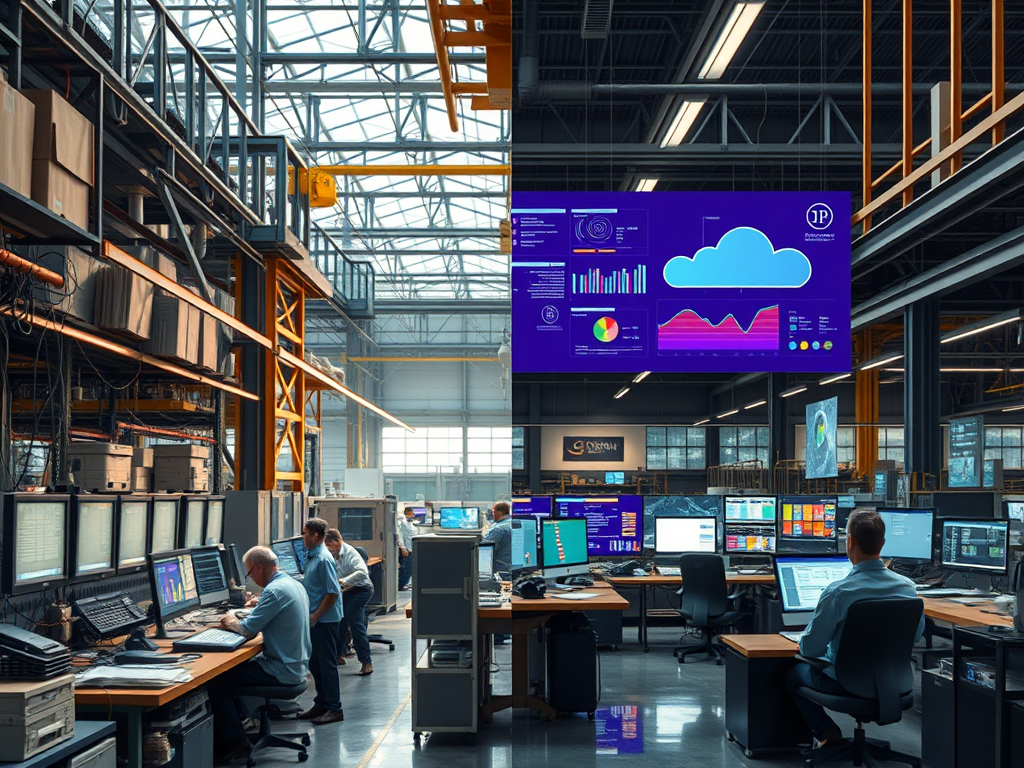
Let’s talk about SAP MII — why so many of us in manufacturing are moving on, and what it’s really like to make that leap.
SAP MII: The Backbone That’s Now Showing Its Age
If you’ve spent time in manufacturing IT, you probably know SAP Manufacturing Integration and Intelligence (MII) — or maybe you still live and breathe it every day, like I did for years. MII was a game-changer when it came out. It let us connect the shop floor to SAP ERP, build custom dashboards, and automate data flows that used to be a nightmare. In the mid-2000s, this was revolutionary. I remember rolling it out at a big site and seeing operators get real-time visibility for the first time. It really did help us bridge the gap between machines and business systems.
But here’s the thing: technology moves fast, and MII hasn’t kept up. SAP hasn’t done any major updates in over five years, and there’s a clear end-of-life date on the horizon — mainstream support ends in 2027, with extended support until 2030.
More importantly, the architecture behind MII is starting to show its age. It’s not built for cloud, it doesn’t play nicely with S/4HANA or modern data platforms, and the custom apps we built on it don’t migrate easily. I’ve seen teams spend months just trying to keep old integrations running — and it’s only going to get harder.
Why Replacing SAP MII Can’t Wait
Here’s what I see on the ground: sticking with MII is risky. Once SAP stops supporting it, you’re on your own for security patches, bug fixes, and compliance. That’s a big deal, especially in regulated industries. I’ve been in meetings where the cybersecurity team flat-out refused to sign off on upgrades, because the old stack was too exposed. I’ve also watched as companies struggled to hire people who still know the guts of MII — that talent pool is shrinking fast.
But it’s not just about risk. It’s about opportunity. Modern manufacturing systems — whether it’s SAP Digital Manufacturing Cloud (DMC), or other MES and IIoT platforms — offer things MII just can’t. Think real cloud scalability, API-first integration, and out-of-the-box analytics. At one site, we moved a legacy MII dashboard to a cloud-native platform and cut reporting lag from hours to seconds. Suddenly, plant managers could make decisions in real time, not after the shift ended.
What Makes Migration So Hard
Now, I won’t sugarcoat it: replacing MII is tough. The biggest headache is custom code. Over the years, we built all sorts of custom connectors, logic, and dashboards in MII. There’s no “one-click” migration. Every site has to inventory what it’s using, map those features to new platforms, and decide what to rebuild, what to drop, and what (if anything) to refactor. I’ve seen projects where 70% of the effort was just figuring out what the old system actually did — documentation was often missing, and the people who built it had long since moved on.
There’s also a mindset shift. MII let us get under the hood and tinker — direct database access, custom tables, low-level enhancements. New platforms, especially cloud ones like SAP DM, are “clean core” — no more hacking the database, everything goes through APIs. This is good for stability, but it means rethinking how we solve problems. I’ve had to coach teams to let go of old habits and embrace new patterns, which isn’t always easy.
Lessons Learned (the Hard Way)
So, what have I actually learned from doing these migrations?
First, start early. The longer you wait, the harder it gets. Every year you delay, the technical debt grows and your risk exposure increases. I’ve seen companies forced into rushed migrations because a critical component failed and there was no support left.
Second, don’t treat this as a pure IT project. Operations, quality, and even finance need a seat at the table. I’ve watched projects stall because we missed a key stakeholder, or because the new system didn’t replicate a critical (but undocumented) business rule.
Third, use this as a chance to clean house. Not everything in MII needs to be rebuilt. In one project, we found that 40% of the custom reports hadn’t been used in over a year. We focused on what really mattered and let the rest go.
Finally — and this is my honest, maybe unpopular opinion — sometimes, the best move isn’t just to “lift and shift” to SAP’s next product. There are other MES and IIoT platforms out there, and in some cases, they’re a better fit for what the plant actually needs. I’ve personally seen sites thrive after moving to best-of-breed solutions that weren’t from SAP, especially when they needed more flexibility or wanted to embrace a Unified Namespace architecture.
Where We Go From Here
Replacing SAP MII isn’t just an upgrade. It’s a chance to rethink how we connect machines, data, and people. Yes, it’s hard work. Yes, it’s uncomfortable. But the payoff — real-time data, simpler architectures, better security, and happier users — is worth it.
If you’re still running MII, don’t wait. Start mapping your landscape, talk to your business users, and explore your options. And if you’re already on the journey, share your lessons. We’re all learning as we go.
Leave a Comment