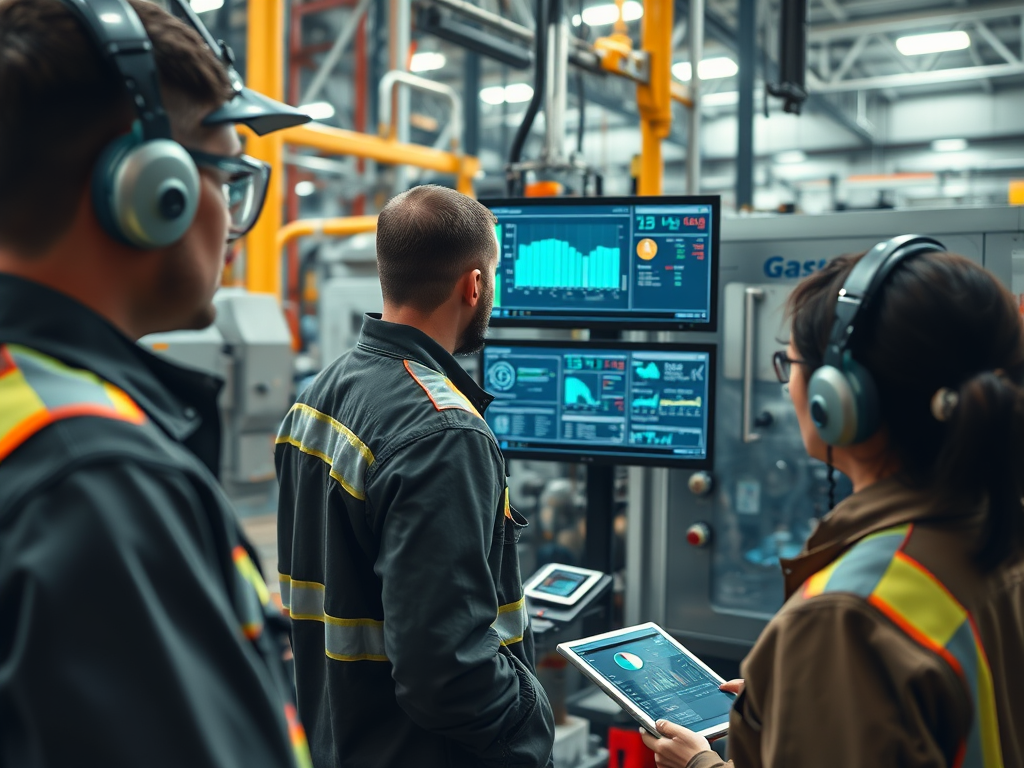
Every year, we see new IIoT trends, new buzzwords, and new “top use case” lists. But inside a plant, the reality is usually much simpler. People don’t come to work excited about Industrial IoT. They come to work hoping the line will run, the batch will stay on track, and problems will be caught early instead of too late.
Most days, the real pain is not a lack of technology. It’s the small daily chaos. Data is scattered, alarms don’t help, downtime reasons are unclear, and basic answers still require too many systems and too many calls.
That’s why, for me, the best IIoT use cases for 2026 are not the fanciest ones. They are the ones that reduce surprises, remove friction from daily operations, and make decisions easier for operators, maintenance, and quality teams.
And one honest opinion. If a solution needs a “data scientist babysitter” to keep running, it’s not an IIoT success. It’s a lab experiment.
1. Predictive Maintenance That Actually Gets Used
Predictive maintenance is still #1 for a reason. Avoiding unplanned downtime is always a win.
What changes in 2026 is the expectation. Plants don’t want “AI alerts”. They want:
- clear failure modes (bearing wear, overheating, misalignment)
- simple thresholds teams trust
- actions that lead to a planned intervention
Example: a pump vibration trend increases slowly for a week. Maintenance fixes it during a planned stop instead of losing a weekend.
2. Real-Time Machine Monitoring for Better Line Decisions
This is the foundation. If you can’t see machine status live, everything turns into guesswork.
In 2026, more plants will scale monitoring to support:
- faster troubleshooting
- better shift decisions
- fewer “walk and check” routines
Example: instead of calling maintenance to confirm if a machine is down, the status is visible and trusted.
3. OEE and Downtime Tracking That Isn’t Fiction
Many plants “have OEE”. But very few believe it.
In 2026, the focus will be on:
- automatic downtime detection
- guided reason code selection (not free-text chaos)
- linking downtime to alarms and events
This is how OEE becomes a real improvement tool, not a weekly argument.
4. In-Process Quality Monitoring (Catch Issues Earlier)
Quality issues rarely explode. They creep in quietly.
More quality use cases in 2026 will focus on:
- monitoring key parameters live
- spotting drift early
- stopping bad output before it becomes scrap
Example: a temperature loop stays “in range” but drifts upward batch after batch. The system flags it before it impacts product.
5. Energy Monitoring at Equipment Level (Not Just Site Totals)
Energy is now a production KPI, not only a utilities topic.
In 2026, plants will focus more on:
- energy per machine
- energy per batch, lot, or SKU
- detecting waste (compressed air is usually a big one)
Example: two identical machines produce the same product. One consumes 20% more power. That’s a problem worth chasing.
6. Smart Alarm Reduction (Because Operators Are Drowning)
Alarm overload is real. People get numb. Then the alarm that matters gets missed.
In 2026, IIoT will help by:
- detecting repeated alarm storms
- identifying chattering alarms
- cutting noise before it reaches operators
Small improvement. Big impact on stability and safety.
7. Event Correlation for Root Cause Analysis (Less Guessing)
This is where streaming data earns its place.
Instead of manually searching trends, teams correlate:
- alarms
- operator actions
- recipe steps
- maintenance interventions
Example: a reject spike happens right after a specific step every time. Correlation shows it’s linked to a valve delay and a sensor filter setting.
8. Remote Expert Support With Real Context
Remote support works best when it’s more than a video call.
In 2026, strong solutions will combine:
- live machine data
- recent downtime and alarms
- guided troubleshooting steps
Example: a technician scans an asset and sees the last three faults and the current sensor readings. Remote experts jump in only when needed.
9. Electronic Logbooks With Auto-Captured Evidence
Manual logbooks still eat time, and they still create mistakes.
In 2026, plants will expand IIoT-enabled logbooks to:
- capture readings automatically
- store timestamped evidence
- trigger exception workflows when something is off
Example: operators don’t write hourly readings anymore. They only add comments when deviations happen.
10. Unified Namespace (UNS) to Scale Everything Faster
The Unified Namespace idea is simple. Create a shared plant data structure that is consistent, reusable, and easy to consume.
In 2026, UNS will grow because it:
- reduces point-to-point integrations
- improves consistency across sites
- supports analytics, MES, and reporting from the same “reality layer”
My honest opinion. UNS is one of the best Industry 4.0 ideas. But it only works with strict governance.
Without naming rules and ownership, it becomes a Shared Mess.
Example: once “Line1/Speed” means the same thing everywhere, scaling dashboards and models becomes much easier.
Final Thoughts
If you’re building a 2026 IIoT roadmap, I’d focus on use cases that:
- reduce downtime fast
- improve quality before it becomes scrap
- make data reusable across teams and sites
Everything else is optional until these basics are strong.
Leave a Comment