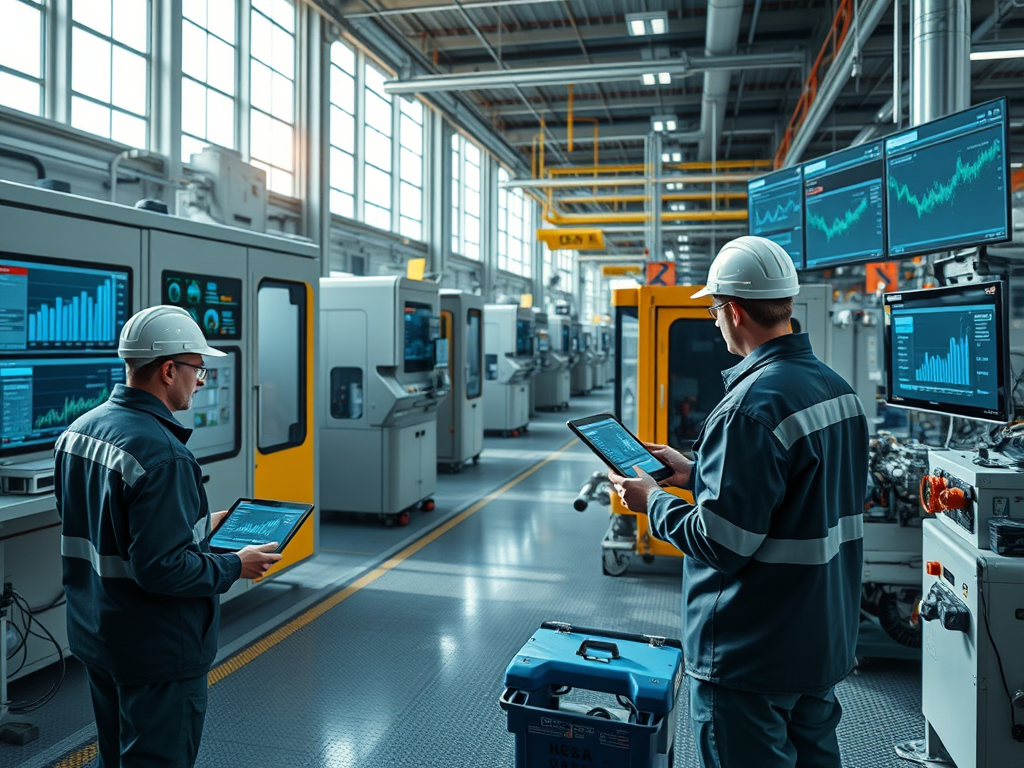
If I had to pick one project that truly started my Industrial IoT journey, it would be this one. Back in 2017, I was helping a large global automotive parts manufacturer — one of the top 10 worldwide — modernize how their plants connected machines, data, and people.
Looking back, I realize this was more than just an SAP MII implementation. It was my first real IIoT project — before I even used that term. We were building a connected factory system long before “edge” and “cloud” became everyday words in manufacturing.
Where It Started
The plants were full of good people, smart engineers, and reliable machines — but not much real-time data. Each site had its own mix of systems, spreadsheets, and homegrown apps. There was no single source of truth, no unified view of performance, and no easy way to connect production, quality, and logistics.
Operators were entering data by hand. Supervisors made decisions based on reports that were already outdated. And because this manufacturer supplied parts to the world’s biggest car brands, there was zero room for error.
That’s when I realized that connecting people and data on the shop floor wasn’t just an IT challenge — it was the beginning of Industrial IoT.
What We Set Out to Do
The goal was ambitious:
- Track production in real time, from raw material to finished parts.
- Monitor equipment health and performance.
- Integrate quality checks directly into the production flow.
- Enable just-in-time logistics tied to the ERP.
- Build a foundation for future analytics and predictive insights.
We didn’t call it an “IIoT architecture” back then, but that’s exactly what it was — a connected ecosystem linking sensors, PLCs, MES, and ERP in real time.
The Tech Stack That Made It Work
We used SAP MII as the digital nerve center — connecting business systems with the shop floor. It handled dashboards, alerts, and workflows for production, quality, and logistics.
SAP PCo acted as the bridge between machines and MII, translating signals from the shop floor using OPC UA and OPC DA. It was our first real experience with edge-level processing — buffering data, cleaning it, and making sure nothing was lost if the network dropped.
And then came Kepware (KEPServerEX) — the unsung hero. It connected to every kind of equipment imaginable, from legacy PLCs to new robotics. Kepware was basically our first IIoT gateway, standardizing machine data across all lines.
Together, these tools created a live data backbone that later inspired how I think about IIoT architectures — with clear layers for data acquisition, integration, and contextualization.
What Changed on the Shop Floor
The impact was immediate:
- Real-time visibility into production and equipment status.
- Automated quality checks with traceability built in.
- Smarter logistics using digital Kanban and JIT tracking.
- OEE dashboards showing where losses were coming from.
- Predictive maintenance pilots using historical data.
We even measured a 10% increase in asset utilization, 12% improvement in labor productivity, and hundreds of thousands of dollars saved from reduced scrap.
But what I remember most isn’t the numbers — it’s the moment operators stopped saying, “The system doesn’t show the real situation,” and started saying, “Let’s check what the system says.” That’s when I knew the data was trusted.
What Didn’t Go Smoothly
Like any first big IIoT project, it came with lessons:
- Legacy equipment is unpredictable. Some machines refused to talk, and others spoke their own dialects of OPC.
- Data mapping takes patience. One wrong tag name can break a dozen reports.
- Standardization is great, but every site wants its flavor of “custom.”
- Change management matters more than technology.
We had long nights, tough cutovers, and plenty of “let’s try that again” moments. But it built a foundation that every later project benefited from.
What I Learned About IIoT
This project taught me what Industrial IoT really means. It’s not about adding sensors or building fancy dashboards. It’s about creating trust between people and data — making sure what happens on the line is visible, reliable, and actionable.
It also taught me that:
- A good tag naming convention is worth its weight in gold.
- Operators are your best sensors.
- The simpler the architecture, the better it scales.
- Real-time data only matters if it changes how people work.
Looking Back
Today, when I design IIoT architectures with MQTT, UNS, and cloud analytics, I still think back to that project. It had all the fundamentals — connectivity, data standardization, edge processing, visualization, and human trust.
We didn’t call it IIoT back then. But in many ways, it was where my IIoT journey truly began.
Leave a Comment