I’ve spent the last years connecting machines to the cloud. Millions of tags. Real-time dashboards. Predictive analytics. The whole Industry 4.0 playbook. But here’s what nobody talks about: we forgot about the people.
The Moment We Knew Something Was Wrong
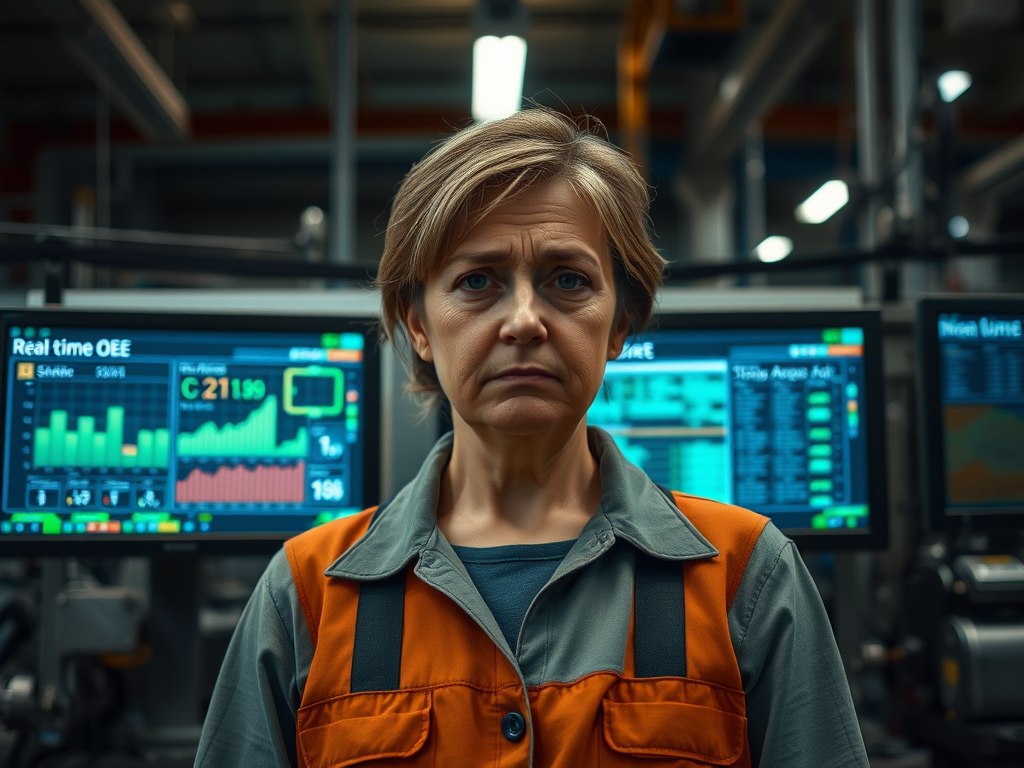
A work station operator stood in front of three screens. One showed real-time OEE. Another displayed SCADA alerts. The third was a spreadsheet where batch data was recorded by hand because “the system doesn’t capture what I actually need“. She looked tired.
A major digital transformation program had just been rolled out. Data streaming. Cloud analytics. AI insights. All the buzzwords. But this operator, with decades of hands-on experience, was still buried under dashboards that did not make her work easier.
That was the moment when the whole digital approach needed to be questioned.
What Industry 4.0 Got Right (and Wrong)
Industry 4.0 wasn’t a mistake. Connecting equipment, streaming real-time data, building unified namespaces—all of that was necessary. I’ve seen plants go from blind to data-driven, and the impact is real. But somewhere along the way, we got obsessed with the technology and forgot why we were doing it. We built systems that:
- Generated thousands of alerts (that people learned to ignore)
- Created dashboards that executives loved (but operators found confusing)
- Optimized for data volume (not for human decision-making)
- Measured everything (but explained nothing)
I remember a project where we successfully streamed thousands of tags to the cloud in under a minute. The engineers cheered. The operators shrugged. “What am I supposed to do with all this?” one of them asked.
He was right to ask.
What Industry 5.0 Actually Means
Industry 5.0 isn’t about new technology. It’s about remembering that manufacturing is still a human endeavor. The shift is subtle but profound:
- Industry 4.0 asked: “How can we automate and optimize everything?“
- Industry 5.0 asks: “How can technology amplify what humans do best?“
I’ve started seeing this play out in some projects:
Example 1: When Experience Proved the System Wrong
A predictive maintenance system was deployed at a large site. The AI flagged a pump for replacement. A veteran maintenance technician disagreed. “That pump always sounds like that,” he said. “It’s fine“. The AI data looked convincing.
The technician was correct. The system was reacting to normal vibration patterns because the model did not understand the baseline behavior of that specific equipment.
This led to a different approach. Instead of expecting AI to make decisions, the system now highlights unusual behavior and lets people confirm what it means. The model learns from technician feedback, and the technician receives better insights. The result is a smarter system and more confident decision making.
Example 2: The Operator Who Redesigned the Dashboard
A polished dashboard was created for production monitoring. It had 40+ metrics, color-coded KPIs, and real-time trend charts. Operators barely touched it.
The team asked one operator what was actually needed on the screen. She drew it on a whiteboard: five key numbers, three status indicators, and a single button to log an issue. Nothing more.
The dashboard was rebuilt based on that design. Adoption jumped from low double digits to nearly full usage in just a couple of weeks.
It showed that simplicity matters on a production line, where time is limited and no one has space to decode dozens of metrics.
What I’m Seeing Change
Across multiple projects and industries, I’m watching a quiet shift happen:
1. Human-Centered Design is Becoming Non-Negotiable
We used to design systems around data flows and technical architectures. Now, the first question is: “Who will use this, and what do they need to accomplish?“
I sat through a requirements workshop recently where we spent two hours just understanding a shift supervisor’s daily routine. Not the process. Not the equipment. Just what her day looked like. The solution we designed was completely different—and way better—than what we would’ve built otherwise.
2. Augmentation Over Automation
Instead of replacing people, we’re enhancing what they can do.
I’ve worked with systems using AR glasses (HoloLens) for maintenance. The technician still does the work, but now they can see digital overlays of schematics, get step-by-step guidance, and even connect to a remote expert who can see what they see.
The technology serves the human, not the other way around.
3. Collaborative Intelligence
The best outcomes happen when AI and humans work together.
We’re seeing batch monitoring systems where the AI detects deviations, but the process engineer interprets whether it matters. Quality systems where ML flags potential issues, but the QA team makes the final call. OEE analytics where the algorithm identifies patterns, but the production team explains why they happened.
It’s not AI versus humans. It’s AI plus humans.
4. Well-Being and Sustainability Matter
Industry 5.0 isn’t just about efficiency. It’s about making manufacturing jobs better and more sustainable.
I’ve seen projects focused on:
- Reducing repetitive strain by automating physically demanding tasks
- Improving shift handovers with better digital tools
- Using real-time data to optimize energy consumption (good for the planet and the bottom line)
- Giving operators more autonomy and decision-making power
People want to work in places that respect both their expertise and their humanity.
The Technologies That Actually Help
So what does an Industry 5.0 stack look like?
1. Unified Namespace (UNS) with Contextualized Data
Yes, this is still an Industry 4.0 concept, but the use case changes. Instead of “let’s collect everything“, it becomes “let’s organize data so people can find what they need.“
We’re building UNS structures that map to how humans think about the plant, not just how the ISA-95 standard defines it.
2. Conversational Interfaces and Natural Language
Instead of learning SQL or navigating complex dashboards, operators should be able to ask: “Why did Line 3 stop twice this morning?” and get a clear answer.
We’re starting to see this with LLMs integrated with IIoT data. Still early, but the potential is real.
3. Digital Twins That Explain, Not Just Predict
Digital twins are powerful, but only if people understand what they’re showing.
The best digital twin project I’ve seen included a “reasoning engine” that didn’t just say “this parameter is out of range.” It explained why it mattered, what could happen, and what the operator should consider doing about it.
4. Edge AI for Immediate Feedback
Nobody wants to wait for the cloud to tell them something’s wrong. Edge processing gives operators real-time feedback when it actually helps—right there on the shop floor.
We’ve deployed edge analytics that can alert an operator within seconds of a deviation, with enough context to decide if it’s urgent or just noise.
The Hard Truth About Industry 5.0
Here’s my unpopular opinion: Industry 5.0 is harder than Industry 4.0.
Building technical systems is straightforward. You have specs, protocols, and standards. It either works or it doesn’t. Building human-centered systems requires empathy, collaboration, and humility. You have to:
- Actually talk to the people who’ll use your system (not just their managers)
- Accept that your first design will probably be wrong
- Admit that a 25-year operator knows things your AI doesn’t
- Design for real humans having a bad day, not ideal users in perfect conditions
That’s uncomfortable for a lot of technical people (including me). But it’s necessary.
What This Means for Practice Leaders
If you’re leading IIoT or Smart Manufacturing initiatives, here’s what I’m learning:
- Include operators in the design process from day one. Not for feedback after you build it. From the beginning.
- Measure adoption, not just implementation. A system that’s technically perfect but nobody uses is a failure.
- Design for the 80%. Not the edge cases. Not the super-users. The average operator on an average shift.
- Build with humans, not just for them. Co-creation is slower and messier, but the results are better.
- Accept that technology is only part of the solution. Change management, training, and culture matter just as much as APIs and data streams.
Where We Go From Here
I don’t think Industry 5.0 means abandoning Industry 4.0. We still need real-time data, cloud analytics, and predictive systems. But we need to deploy them with a different mindset.
The goal isn’t to replace human expertise—it’s to enhance it. To give people better tools, clearer information, and more agency. To design manufacturing systems that are not only efficient but also humane.
I’ve spent two decades building connected factories. The next decade will be about making those factories work for the people in them.
And honestly, that’s more exciting than any dashboard I’ve ever built.

Leave a Comment