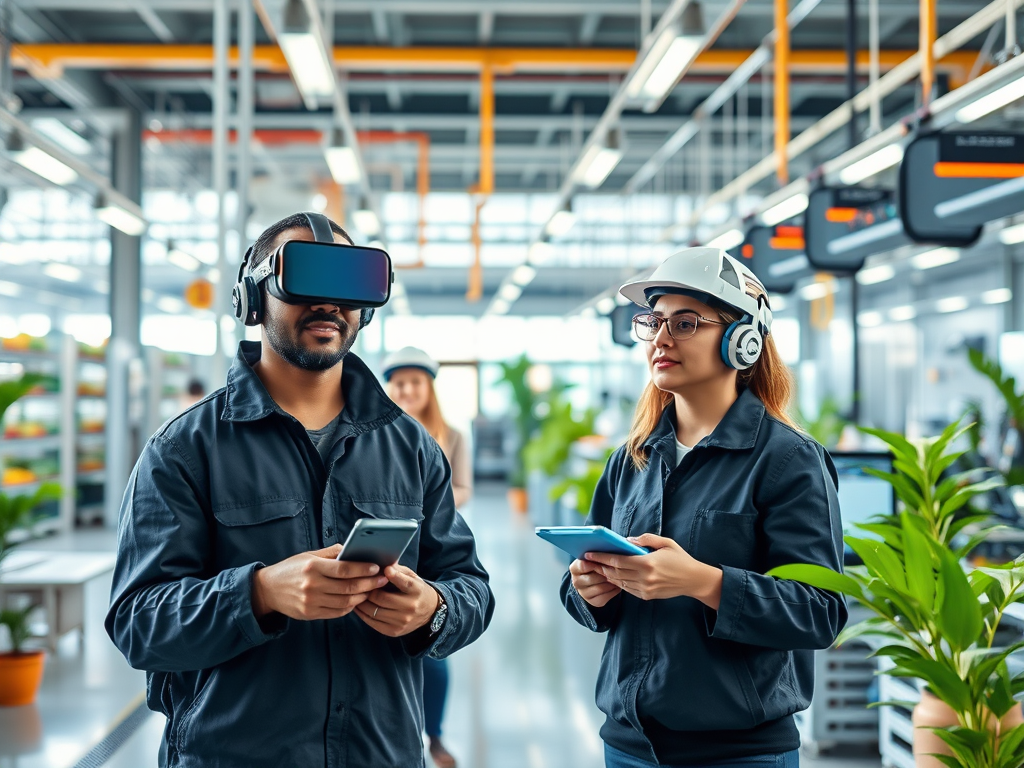
Industry 5.0 might sound like a buzzword, but underneath it’s about something real: putting people back at the center of manufacturing. It’s about making factories not just smarter, but also more human, sustainable, and resilient.
I’ve spent the last 20 years watching this evolution unfold — from the early days of manufacturing integration systems to today’s cloud-first, AI-driven, edge-connected plants. Here’s what I’ve seen and learned about Industry 5.0 — the good, the hard, and the honest.
What Is Industry 5.0, Really?
Ask ten people, and you’ll get ten different answers.
To me, Industry 4.0 was about connecting machines, data, and systems — making factories digital, automated, and efficient.
Industry 5.0 is about reconnecting the human. It’s about designing technology that works for people, not the other way around.
That means building sustainable operations, resilient systems that recover when things go wrong, and workplaces where people actually want to be — not just parts of a machine. It’s about worker empowerment, environmental impact, and the ability to adapt quickly when disruptions hit.
Human-Centric Manufacturing: Real Stories, Real Impact
Let’s start with the human side — because honestly, this is where most “smart factory” projects fail.
Augmented Reality (AR) and Wearables: Making Work Simpler
A few years ago, I saw a large manufacturing site introduce augmented reality support systems using HoloLens headsets. The concept was simple: frontline operators could connect instantly with remote experts. Instead of waiting hours (or days) for a specialist to travel, a technician could share their view in real time and receive step-by-step guidance.
The impact was real — mean time to resolution dropped, operators felt more confident, and stress levels fell. Travel costs went down too, but the biggest win was human: people felt supported.
I’ve also seen biometric wearables used for hands-free authentication. In regulated environments, constant logins and manual tracking can be painful. With wearables, operators simply tapped in — the system recognized them, logged actions automatically, and stayed compliant. It saved minutes every shift, reduced errors, and made work smoother. Small change, big impact.
Worker Empowerment: Mobile Apps, Dashboards, and Collaboration
I’ve seen mobile apps transform how operators handle equipment checks and deviation management — putting information right where it’s needed. At one site, paper-based batch records became digital checklists with instant photo capture. Approval times shrank from days to hours, freeing people from paperwork to focus on production.
I’ve also seen real-time OEE dashboards rolled out not just for managers, but for shift teams. Large screens on the shop floor displayed downtime, quality issues, and performance trends. The real benefit wasn’t the dashboard itself but the conversations it sparked. Teams began solving problems together instead of blaming each other. Within six months, one plant saw a meaningful boost in OEE.
Honest truth:
Technology only helps if it fits how people actually work. Push tools without involving operators, and you’ll get shelfware. Co-designing with the people who’ll use them takes longer upfront — but it’s the only way to achieve adoption and real value.
Sustainable Manufacturing: Practical Results, Not Buzzwords
Sustainability isn’t a slogan anymore — it’s becoming a license to operate. Regulators, customers, and employees expect it. But in manufacturing, “going green” must translate to real savings and measurable impact.
IIoT for Energy Optimization and Waste Reduction
At one large site, I’ve seen thousands of sensors connected — monitoring temperature, pressure, flow, and power in real time. Data streamed into a unified platform for AI-based analysis. The result: hidden energy leaks identified, HVAC schedules optimized, and equipment running out of spec quickly flagged. Within a year, energy costs dropped significantly and carbon reporting became automatic.
In another case, predictive maintenance reduced unplanned downtime and maintenance costs. The takeaway: when IIoT and analytics help you see problems before they happen, you save energy, cut waste, and make everyone’s life easier.
Scaling Up with Unified Namespace and Data Lakes
The real breakthrough comes when companies move beyond silos — adopting a Unified Namespace (UNS) and cloud data lakes like Snowflake. Suddenly, energy, quality, and production data can be viewed side by side across sites. This visibility unlocks benchmarking, outlier detection, and shared best practices.
Honest truth:
Sustainability metrics are only as strong as their data. Many still rely on spreadsheets and estimates. Real progress happens when you automate data collection, make it part of daily decisions, and align it with incentives — not just reports.
Resilient Manufacturing: Built for the Unexpected
If COVID taught us anything, it’s that resilience matters. But resilience isn’t just cybersecurity or backup plans — it’s about systems that keep running and people who stay safe, no matter what.
Edge Computing and Hybrid Cloud
I’ve seen hybrid edge-cloud architectures change how sites handle data reliability. One factory buffered all machine data locally (“store and forward”) during network outages, then automatically synced everything when connectivity returned. During a planned cutover, they ran 48 hours offline with zero data loss and full traceability. Operators kept working; compliance never broke.
Predictive Maintenance and Digital Twins
I’ve seen digital twins monitoring critical assets — pumps, reactors, compressors — to predict failures before they happen. Engineers could focus on optimization instead of firefighting.
Disaster Recovery and Continuity
I’ve seen these systems tested in real life, not just simulations. During a power outage, edge systems kept collecting data, and once power returned, everything synced automatically — no re-entry, no lost batches, no compliance issues. That’s true resilience — and it builds trust with both people and auditors.
Honest truth:
Resilience is about people and culture as much as systems. Technology won’t save you if recovery plans stay on paper or teams aren’t trained. You have to test, learn, and adapt continuously.
Human-Machine Collaboration: Making Tech Work for Us
Industry 5.0 isn’t about replacing people — it’s about augmenting them. I’ve seen the most value when technology empowers rather than controls.
- AR/VR for remote troubleshooting: faster problem-solving and on-the-job learning.
- Wearables for safety and compliance: fewer errors, smoother workflows.
- Real-time dashboards and mobile apps: frontline visibility and faster action.
- Closed-loop automation: AI detects issues, triggers actions, and adjusts settings — with humans in control.
At the end of the day, the best systems are the ones people actually use — because they make work better, safer, and more meaningful.
What’s Next: My Take
Industry 5.0 isn’t a revolution — it’s a mindset shift. The technology is already here: IIoT, AI, cloud, edge, AR/VR, wearables.
The challenge is making it work for people, the planet, and resilient operations.
That means listening more, piloting fast, scaling what works, and being honest about what doesn’t.
One unpopular opinion?
Don’t chase every shiny tool. Focus on the basics: reliable data, empowered teams, and simple, robust processes. That’s what makes factories truly smart, sustainable, and human.
Leave a Comment