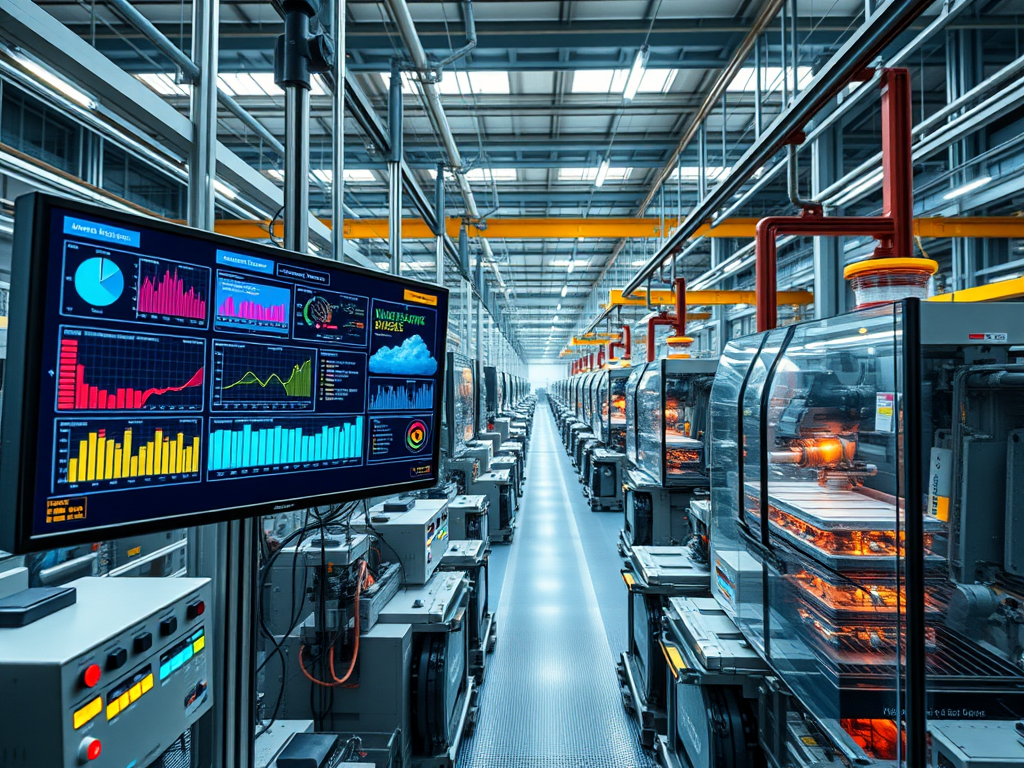
I’ve been working with automated OEE systems for several years. Starting from early SAP MII implementations, I’ve built and supported solutions that collect real-time data from PLCs, calculate availability, performance and quality, and provide operators with live dashboards. These systems have served manufacturing sites well. They were reliable, automated, and deeply integrated with shop floor and ERP processes.
However, as you know, SAP MII is reaching its end of life in 2027. Many manufacturers are now evaluating how to transition their OEE solutions (based on MII) to a modern IIoT platform. From experience, it’s not just a technical upgrade—it’s an opportunity to rethink scalability, data accessibility, and long-term sustainability.
What the SAP MII OEE Setup Did Well
For its time, SAP OEE based on MII was a strong and capable platform. It supported:
- Real-time data collection via OPC servers
- Automated OEE calculations at regular intervals
- Operator dashboards with live availability, performance, and quality data
- Integration with SAP ERP for production orders and scheduling
It was a solid, automated solution that delivered value daily. The challenge isn’t that it no longer works—it’s that it no longer fits the scale and flexibility modern operations require.
The Pain Points That Became Hard to Ignore
Over time, several limitations have become more evident:
- Heavy local infrastructure: Each site needed its own servers, databases, and custom configuration. Rolling out to a new site could take months, and maintaining consistency was difficult.
- Limited scalability: Performance dropped when tag counts reached a few thousand. Modern plants now stream tens of thousands of signals, and MII/PCo simply wasn’t built for that scale.
- Rigid data structures: MII’s hierarchies were powerful but not always flexible. Adapting them to nonstandard equipment or evolving production models often meant adding complex workarounds.
- Complex integrations: Sending OEE data to a data lake, MES, or predictive maintenance system required custom interfaces. Every connection became a separate project.
- Data silos: MII’s architecture kept OEE data isolated. Sharing contextualized, real-time data across multiple applications or sites wasn’t straightforward.
These challenges make it difficult to scale OEE consistently across plants or to connect with modern enterprise analytics.
What a Modern IIoT Approach Can Deliver
Moving OEE to a modern IIoT platform isn’t just about replacing MII—it’s about rethinking the architecture around openness, scalability, and reuse. A modern setup separates responsibilities clearly between the edge and the cloud, enabling faster rollouts and more flexible data sharing.
1. Modular and Scalable Architecture
The edge handles data collection, buffering, and real-time OEE calculations for operators. The cloud provides long-term storage, enterprise analytics, and cross-site reporting. This setup supports standardized templates, automated data mapping, and quick deployment—reducing rollout time from months to weeks.
2. Unified and Flexible Data Model
Instead of rigid hierarchies, data follows a standardized and contextualized model. Each tag or signal carries metadata such as site, line, and equipment details. This creates a single, unified source of truth. When an event—like downtime—occurs, it’s published once and made instantly available to any subscribed system, such as MES, quality, or analytics tools.
3. High Performance at Scale
Modern IIoT architectures can handle thousands of signals per second, across multiple sites, without performance degradation. They can integrate with existing historians or control systems in real time while maintaining low latency and high reliability. This unlocks visibility that older architectures couldn’t achieve efficiently.
4. Native Connectivity and Open Standards
Protocols like OPC UA, MQTT, and REST APIs are supported natively. This eliminates the need for middleware and simplifies direct connections to PLCs, DCS, and laboratory instruments. Fewer components mean fewer points of failure and easier long-term maintenance.
5. Edge Reliability with Cloud Visibility
Operators continue to use fast, reliable dashboards at the edge, even without cloud connectivity. At the same time, all OEE data is securely streamed to the enterprise cloud for analysis and reporting. This dual setup supports both real-time operations and enterprise-wide analytics, ensuring consistency across all sites.
Comparing the Two Approaches
Migrating from SAP MII OEE to an IIoT-based architecture doesn’t change the core goal—tracking availability, performance, and quality in real time. What changes is how efficiently and flexibly it can be done. With a modern IIoT platform, you gain:
- Scalability – Faster deployments, higher data volumes, easier global rollouts.
- Interoperability – Open standards, unified data models, and simplified system integration.
- Lower maintenance – Reduced infrastructure, less customization, and faster time to value.
It’s also easier for developers to manage through modern scripting, APIs, and version control, instead of proprietary tools and manual configurations.
The Bottom Line
Moving OEE from SAP MII to a modern IIoT platform isn’t a revolution—it’s a natural evolution. The core OEE logic stays the same, but the underlying architecture becomes lighter, more connected, and easier to scale. It prepares plants for future needs—enterprise analytics, AI-driven insights, and digital transformation—without losing the proven strengths of automated OEE.
For organizations still running SAP MII OEE, now is the right time to start planning the transition. It’s an opportunity to modernize, simplify, and unlock data that has been trapped for too long.
Leave a Comment