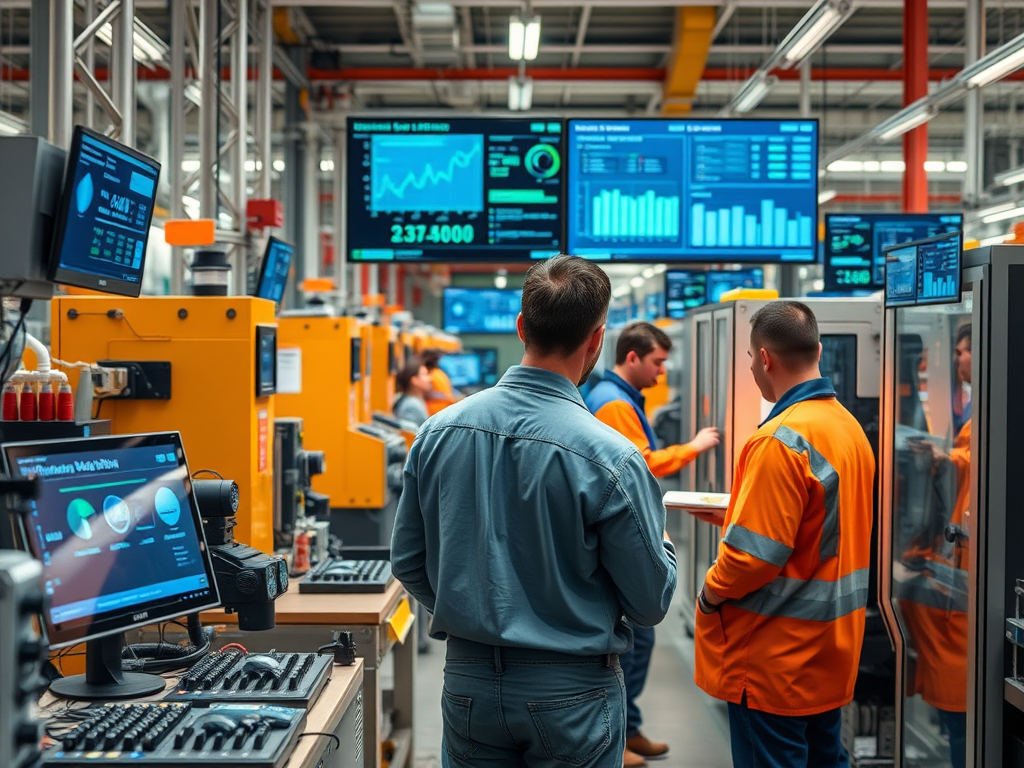
If you spend enough time in manufacturing, you realize the shop floor is the real test for any digital solution. Since 2005, I’ve worked on more than 50 SAP Digital Manufacturing (MII/OEE/PCo) implementations across more than 10 industries, from the Americas to Europe, Asia, and the Middle East. This is what I’ve learned — not from theory, but from rolling up my sleeves and helping teams connect machines, data, and people.
From SAP xMII to Modern IIoT: The Evolution I’ve Lived
My first SAP xMII project was in 2005, back when real-time data meant “refresh every 5 minutes if you’re lucky.” We were integrating PLCs, SCADA, and historians with SAP ERP — and just getting a single dashboard to show live production numbers felt like magic. Over the years, I watched SAP MII evolve from a niche integration tool to a backbone for OEE, traceability, edge-to-cloud connectivity, and analytics in regulated and high-volume environments.
What’s changed most? The scale and speed. Today, we’re streaming thousands of process tags per second from shop floor systems to cloud data lakes, using open standards like OPC UA, MQTT. In regulated industries, this means real-time traceability, predictive quality, and AI-driven insights are actually possible — not just PowerPoint dreams.
What SAP MII Projects Really Delivered
Looking back, the best SAP MII projects shared a few things in common:
- Real-Time Visibility: Every plant wanted “one version of the truth.” MII let us pull data from machines, operators, and even lab systems into dashboards that anyone — from the line worker to the plant manager — could use. This wasn’t just for show. For example, at a metals plant in Brazil, real-time dashboards helped cut unplanned downtime by 15% in the first year. At a food & beverage site in Ireland, we used MII to spot bottlenecks that had been hiding for years.
- Faster, More Accurate Decisions: When you connect SAP MII to ERP and LIMS, you get context — not just numbers. In chemicals, this meant batch genealogy and compliance reporting were automated, not handwritten after the fact. In automotive, it meant quality issues could be traced back to a specific machine or shift in seconds, not days.
- End-to-End Integration: The biggest value always came from connecting the “top floor” (ERP, planning, supply chain) to the “shop floor” (machines, operators, sensors). That’s how you get things like “right material, right place, right time” — and avoid costly surprises at the end of the month.
Challenges (and a Few Painful Lessons)
No matter the country or industry, a few challenges kept coming up:
- Bridging IT and OT (and the Human Gap): Getting IT and OT teams to work together is still the hardest part. I’ve seen world-class automation engineers and SAP experts talk past each other for weeks. The solution? Get everyone in the same room, map out the full process (whiteboard, not Visio), and agree on what “good data” looks like. It sounds simple, but it’s the only way to avoid finger-pointing when something break.
- Standardization vs. Local Reality: Every global rollout hits the “template vs. local tweak” debate. In South America, for example, plants often needed workarounds for unreliable network infrastructure. In Europe, strict data privacy rules forced us to rethink how we shared operator data. The lesson: build templates, but allow some flexibility — and always pilot in a “tough” site first.
- Legacy Systems and Data Quality: Some plants still run equipment from the 1980s. I’ve had to integrate with control systems that only spoke “serial over RS-232.” Data quality is another beast — garbage in, garbage out. We had to invest in automated validation, alerts for missing data, and regular audits. Never assume the data is right just because it’s digital.
- Change Management (a.k.a. “What’s in it for me?”): Operators and supervisors are the real users. If they don’t see value, your beautiful dashboard will gather dust. The best results came when we involved them early, listened to their pain points, and showed quick wins — like reducing paperwork or making shift handovers easier. In one project, just digitizing the shift logbook saved hours per week and built trust for bigger changes.
What’s Different Across Countries
- Americas: Plants in the U.S. and Brazil were usually open to innovation but had to work around legacy gear and, sometimes, spotty connectivity. In Mexico, cost pressure was high, so every project needed a clear ROI and fast payback.
- Europe: Stringent compliance and privacy rules shaped everything. Plants often had more automation but also more bureaucracy. Standardization was easier, but change was slower.
- Asia: Speed was the name of the game. Plants wanted quick pilots and were willing to experiment, but language and time zone barriers made remote support tricky.
- Middle East: Projects here often meant greenfield sites with ambitious goals. The challenge was building local skills and support, not just delivering technology.
Industry Snapshots: What Worked, What Didn’t
- Automotive: High volumes, just-in-time pressure, and zero tolerance for downtime. MII helped with traceability and real-time OEE. The trick was making dashboards simple enough for operators but detailed enough for engineers.
- Food & Beverage: Fast-moving, lots of SKUs. MII made it easier to track yield losses and downtime. One beverage plant in the Middle East used MII to standardize KPIs across five sites, which helped them spot best practices and cut waste.
- Oil & Gas / Chemicals: Safety and reliability first. Integrating with DCS and historian systems was critical. We had to build extra safeguards for data integrity and focus on maintenance use cases.
- Pharma & Life Sciences: Compliance is king. Every integration had to be GxP-validated, and audit trails were non-negotiable. We used MII to automate batch records, reducing manual errors and audit findings. But every change took longer — more validation, more documentation.
- Metals, Mining, Paper: These plants ran 24/7. MII helped with asset monitoring and root cause analysis. The main challenge was dealing with old equipment and noisy data.
A Few Practical Tips
- Start Small, Scale Fast: Pick a high-impact use case, deliver value, and use that as your proof point.
- Templates Save Time: Standardized connectors, dashboards, and data models cut delivery time in multi-site rollouts. But don’t get dogmatic — allow for local tweaks.
- Automate Data Validation: Set up alerts for missing or bad data. It’s easier to fix a broken sensor today than explain a bad batch report next month.
- Invest in Training: The best tech fails if people don’t know how to use it. Regular training, clear documentation, and on-site support make all the difference.
- Celebrate Quick Wins: Even digitizing a paper form can win hearts and minds. Build momentum with small victories.
For Me, SAP MII Was a Bridge
Here’s my take: SAP MII was a crucial bridge — connecting islands of data, people, and processes. But as the world moves to IIoT and cloud-native architectures, the future is about open, flexible platforms that can handle the scale, speed, and complexity of modern plants.
That said, the core lessons still hold: focus on real business value, connect what matters, and never forget the people on the shop floor. Tools will change, but those basics won’t.
Leave a Comment