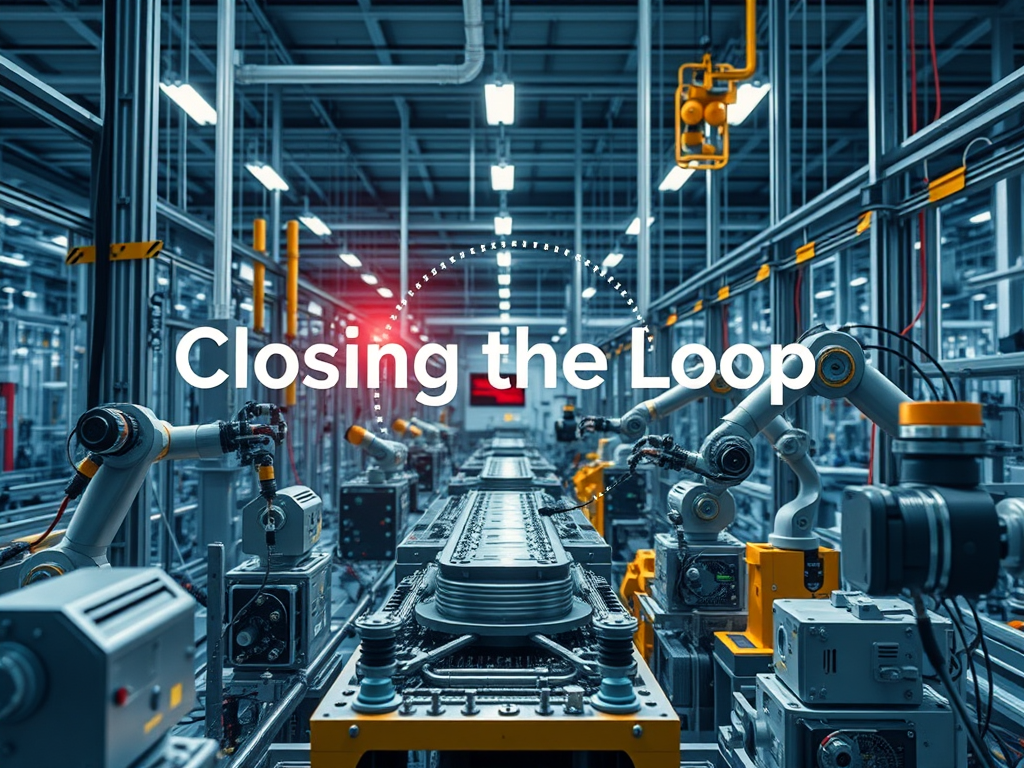
If you work in manufacturing today, you’re probably hearing a lot about “Agentic AI” and self-correcting systems. I’ve spent the last two decades watching factories evolve from islands of automation to fully connected, data-driven environments. We moved from PLCs talking to themselves, to MES dashboards, to cloud analytics. The next step I keep seeing, mostly in pilots, is what we call “closing the loop”.
Closing the loop means moving beyond monitoring and alerts. It means systems that can sense what’s happening, understand it in context, and act to correct problems before people even notice them. This is not just another tech layer. It changes how plants are operated, how problems are solved, and how resilient production really becomes.
What Is Agentic AI in Manufacturing?
Traditional automation does what it’s told. PLC logic executes rules. DCS maintains setpoints. MES tracks events and enforces workflows. When something goes wrong, an alarm fires and a human steps in.
Agentic AI is different. It’s AI that can act as an agent with a goal. It senses data, reasons about what that data means, decides on an action, and executes it. All of this can happen without waiting for a human to connect the dots.
Think of it as a digital co-worker. Not just watching dashboards, but actually stepping in. If pressure is rising in a system, a classic rule might trip an alarm or shut something down. An agentic system looks at trends, context, historical behavior, and downstream impact. It might adjust flows, change timing, or slow a process to prevent a failure entirely.
This is autonomy with intent, not just automation. It’s also not magic. These agents are only as good as the data and boundaries we give them.
Why Self-Correcting Manufacturing Matters
Anyone who’s worked plant support knows the pain. A small issue happens off-shift. Nobody sees it. Quality drifts or a line sits idle until morning. By the time someone reacts, you’ve lost hours, material, or worse, an entire batch.
Traditional systems are reactive. They work well when the problem is known and scripted. They struggle when reality doesn’t match the playbook. Self-correcting manufacturing is about closing that gap. The system doesn’t just detect a problem. It contains it, mitigates it, or fixes it before it escalates.
In my opinion, this is where real value shows up. Less firefighting. Fewer surprises. More predictable outcomes.
How IIoT Makes This Possible
None of this works without data. And not just data sitting in silos.
IIoT connects machines, sensors, controllers, and software so that operational data flows continuously. Temperatures, vibrations, states, batch steps, counts, quality results. All of it needs to be available in near real time.
Where I’ve seen the biggest success is when plants adopt a Unified Namespace. A UNS is basically a shared, real-time data model for the plant. One place where data is contextualized and consistent, whether it’s used by operators, engineers, analytics, or AI agents.
Without this, AI flies blind. With it, agents can reason across machines, lines, and even sites.
Closing the Loop in Practice
Here’s how this usually comes together on real plant floors.
Data Everywhere, All the Time
First, assets get connected. New machines, old PLCs, utilities, quality systems. IIoT gateways and OPC UA servers pull data into a streaming backbone. MQTT or Kafka is often used so data moves fast and reliably.
This data is structured in the UNS so everyone speaks the same language. No more guessing what a tag means or where it came from.
Real-Time Reasoning and Action
Agentic AI sits on top of these streams. Sometimes at the edge. Sometimes in the cloud. Often both.
The agent watches for patterns. Drift. Anomalies. Early signals that humans would miss. When something looks wrong, it doesn’t just log it. It decides what to do. That action could be as small as adjusting a setpoint or as big as rerouting production and scheduling maintenance.
Feedback and Learning
The loop only closes if the system checks its own work. After an action is taken, the agent watches the result. Did the correction help. Did it overshoot. Should it try something else next time.
This is where self-correcting really happens. The system learns from every cycle. Over time, it gets faster and more accurate.
What This Looks Like in the Real World
Process Manufacturing Optimization
In process plants like chemicals, operators used to rely on experience and trend screens. Today, I’ve seen AI agents monitoring hundreds of variables continuously.
When yield starts to drift, the agent looks upstream and downstream. It predicts impact. It adjusts temperatures, flows, or timing automatically. The result is less scrap, tighter quality, and far fewer late-night calls. Operators still oversee the process, but they’re no longer chasing every small deviation.
Quality Control in Discrete Manufacturing
In discrete environments, machine vision combined with AI has been a game changer. Instead of sampling parts, every unit is inspected.
What’s different now is the closed loop. When defects trend upward, the system traces them back to a tool, feeder, or setting. It adjusts the process immediately. In one case I saw, rework dropped dramatically and first-pass yield improved without adding headcount.
Autonomous Maintenance
Predictive maintenance is familiar to most plants. Agentic AI takes it further.
Instead of just predicting failure, the agent schedules work, reroutes production, and even triggers spare part orders. Is it perfect. No. Early on, systems can be overly cautious. But I’ve consistently seen large reductions in unplanned downtime when this is done right.
The Architecture in Plain Terms
You don’t need a science project. You need a few solid building blocks.
- Connected assets using IIoT gateways and industrial protocols
- A Unified Namespace or equivalent data layer for context
- Real-time streaming for fast data movement
- Agentic AI that can observe, decide, and act
- Feedback loops so the system learns over time
That’s it. Everything else is implementation detail.
Honest Opinion
Here’s the reality check.
Bad data will sink you. If sensors are unreliable or tag models are messy, AI will struggle. Most projects spend more time fixing data plumbing than building models.
Change management is harder than the tech. Operators need to trust the system. Engineers need transparency. The best results come when humans stay in the loop early and gradually hand over control.
Full autonomy out of the box is mostly marketing. This is a journey. Start with one line or one use case. Prove value. Scale carefully.
And yes, sometimes AI gets it wrong. Agents can overreact to sensor noise and shut down good equipment. Guardrails, overrides, and common sense are not optional.
Where to Start
If you’re serious about closing the loop, start small.
Pick a clear use case. Predictive maintenance, OEE, or quality is usually a good entry point. Invest in a solid data backbone and a clean UNS. Involve operators early. Show results quickly. Scale once trust is earned.
This is not a single project. It’s a new operating model. But once you see a plant that truly closes the loop, it’s hard to imagine going back.
Leave a Comment