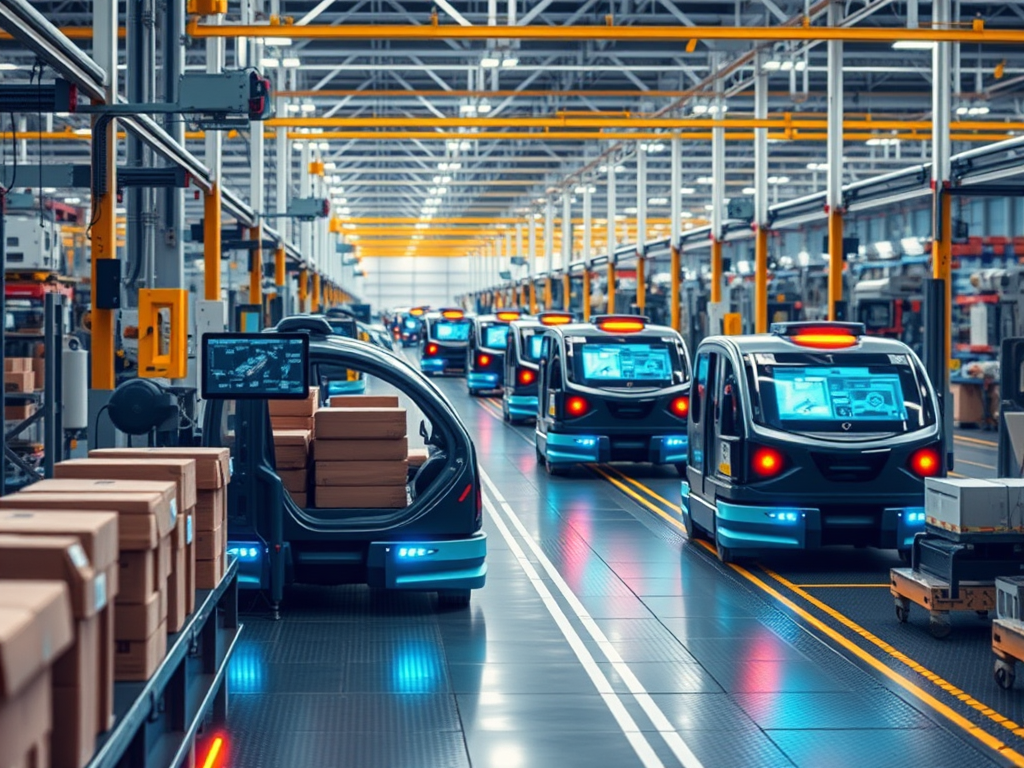
Some projects stay with you — not just for the technology, but for how they reshape what you think is possible on a shop floor. A few years ago, I was part of a large automotive manufacturing initiative that brought together autonomous guided vehicles (AGVs), SAP Manufacturing Execution (ME), and SAP Manufacturing Integration & Intelligence (MII). We called it “algorithmic production.” It was ambitious, complex, and ultimately one of the most rewarding experiences of my career.
Setting the Stage: Why Combine AGVs and MES?
The plant already ran a highly automated, high-volume operation with tight logistics and efficiency demands. The next step was full automation of internal material movement using AGVs — not just to replace manual tasks, but to give the plant flexibility to adapt production dynamically.
SAP ME managed execution — tracking production orders, materials, and quality — while SAP MII acted as the real-time integration layer between MES, ERP, and the AGV fleet. Together, they created a system capable of reacting instantly to shop floor events.
Architecture Overview: Connecting IT and OT
The architecture followed a layered model: ERP at the top, SAP ME in the middle, SAP MII as the orchestration layer, and the shop-floor layer with PLCs, SCADA, and AGV systems.
Here’s how it worked in simple terms:
- ERP sent production orders to SAP ME.
- SAP ME tracked execution and progress.
- SAP MII handled real-time data exchange and coordination between systems.
- The AGV Manager executed transport jobs triggered by MII and returned status updates.
- OPC UA and SAP Plant Connectivity (PCo) provided standardized communication between the systems.
Everything ran event-driven — when one process finished, it automatically triggered the next. This minimized manual handoffs and ensured the line kept moving.
Key Challenges and How We Solved Them
- Integration Complexity: Getting SAP ME, MII, and the AGV Manager to communicate using different protocols (SOAP, REST, OPC UA) was tough. Data model alignment took time, especially defining jobs, statuses, and locations. Templates and shared models eventually brought consistency.
- Real-Time Data Flow: Even a few seconds of delay could halt production. We implemented buffering and store-and-forward logic in MII and PCo to handle network issues, plus real-time monitoring dashboards to detect delays early.
- OPC UA and Connectivity: Tag naming, certificates, and vendor-specific quirks caused repeated troubleshooting. We built automated tag configuration scripts and central governance to simplify maintenance.
- Change Management: The hardest part wasn’t technical — it was human. Operators, IT, and logistics teams all had to adjust. Training and transparent communication helped build trust, especially while AGVs were still proving their reliability.
What Worked: Breakthroughs and Insights
- Algorithmic Production: Moving from static lines to dynamic decision-making gave the plant flexibility to reroute materials automatically when issues arose.
- Event-Driven Orchestration: Shifting from polling to event-based messaging made the system faster, easier to debug, and scalable.
- Standardization: Reusable templates for common workflows, data models, and dashboards helped replicate success across other lines and plants.
Real Outcomes
After nearly two years, the system achieved full AGV–MES integration. The results were clear:
- Greater flexibility in material flow
- Fewer manual errors
- Real-time visibility into production and logistics
- Faster troubleshooting and continuous improvement through better data
Lessons Learned
True digital transformation goes beyond connecting systems — it’s about aligning processes and people. Every integration is different, and “plug-and-play” rarely works in real-world manufacturing.
Also, simplicity matters. Sometimes the most maintainable solution is not the most technically advanced one. Keeping manual overrides and easy-to-use dashboards built confidence on the shop floor.
Final Thoughts
Smart manufacturing isn’t about replacing people with machines. It’s about empowering them with systems that see, think, and respond together. When done right, technology doesn’t just improve efficiency — it builds collaboration and trust across the entire operation.
Leave a Comment