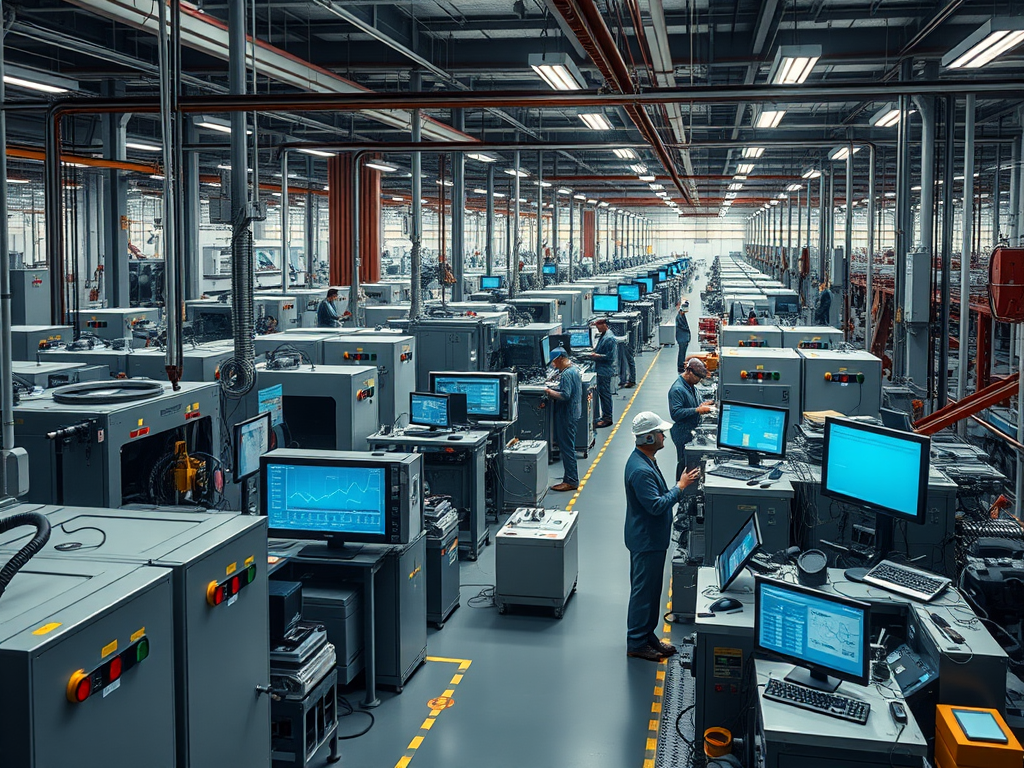
Let’s talk about what’s actually changing on the factory floor with IIoT right now—not what slide decks and vendor pitches promise, but what’s really happening when teams connect machines, data, and people across different plants and industries. Some of these trends are overhyped. Some are quietly transforming operations. And a few sit somewhere in between.
The Big Shift: From Islands of Automation to Connected Plants
A few years ago, IIoT mostly meant connecting a few machines for dashboards or OEE tracking. Today, the real trend is full plant connectivity—machines, sensors, legacy PLCs, cloud systems, and people all linked into a single, living data fabric.
I’ve seen this shift firsthand at large manufacturing sites. The goal is simple: break down data silos so you can see, analyze, and act on what’s happening right now.
This is where standards like OPC UA, MQTT, and the Unified Namespace (UNS) come in. UNS isn’t just another buzzword. It’s a practical way to organize plant data—production, quality, maintenance, and more—into one consistent structure that any system or user can access in real time.
In my projects, this made scaling IIoT much easier. Each new line or machine simply connects to the same namespace, instead of building one-off integrations. It’s not magic—but it’s a major step forward from the point-to-point chaos of the past.
Edge Computing and Real-Time Data: Why the Cloud Isn’t Enough
One lesson stands out: sending all your data to the cloud sounds good in theory, until you try to run a production line on it. Latency, bandwidth limits, and cost all become real constraints.
That’s why edge computing has become essential. We’re now running analytics and AI models directly on the shop floor, close to the machines where data is generated.
By 2025, most real-time decisions—like anomaly detection or quality inspection—will happen at the edge, not in distant data centers. It’s faster, more reliable, and more secure. Edge AI can catch subtle issues early, helping reduce scrap and prevent unplanned downtime.
In short, the edge isn’t replacing the cloud—it’s making the cloud smarter.
Digital Twins and AI: From Simulation to Autonomous Operations
Digital twins—virtual replicas of machines, lines, or entire plants—have moved beyond innovation labs. I’ve worked on projects where twins receive live sensor data, allowing teams to simulate “what-if” scenarios or predict equipment failures before they happen.
The real breakthrough comes when digital twins are paired with AI and machine learning. These models learn what “normal” looks like, detect small drifts in performance, and flag anomalies before humans would notice.
I’ve seen digital twins used to optimize energy use, train operators in a virtual environment, and even test new production schedules overnight before applying the best version in the morning.
That said, digital twins only deliver value if they’re continuously updated with accurate data. Without that, they quickly turn into digital paperweights.
Sustainability: IIoT as a Green Lever, Not a Buzzword
Sustainability has moved from corporate slogans to daily operations. More manufacturers are now asking, “How can we use IIoT to cut waste and energy?”
I’ve seen clear results. For example, I’ve seen companies deploying submetering and real-time energy monitoring across a site, tracking usage down to individual machines. The data revealed hidden inefficiencies that helped reduce both energy consumption and costs.
Another example is CO₂ monitoring. By using IIoT sensors, one plant optimized its boiler operations in real time, meeting both production and environmental targets.
The biggest sustainability win from IIoT? Making invisible waste visible—so teams can act immediately, not months later in a report.
Cybersecurity: The Elephant in the Server Room
Let’s be honest—connecting everything also means exposing everything. Many plants now have thousands of connected devices, some still running default passwords or outdated firmware. The attack surface is massive.
The most common risks I’ve seen include unmonitored devices, legacy systems without encryption, and third-party software with hidden vulnerabilities.
The best defense is layered security: network segmentation, zero-trust access, regular vulnerability scans, and, most importantly, a strong culture of security awareness.
Still, it’s a constant battle. I’ve seen ransomware take down production for days. If your cybersecurity budget doesn’t match your connectivity ambitions, you’re taking unnecessary risks.
Workforce Transformation: The Rise of the Connected Worker
IIoT isn’t just changing machines—it’s changing how people work.
Connected worker tools like wearables, AR headsets, and mobile apps give operators real-time guidance, remote support, and instant feedback. I’ve seen these tools improve training, safety, and even job satisfaction.
For example, a new operator can scan a QR code on a machine to get step-by-step instructions, reducing errors and increasing confidence.
However, technology alone won’t solve the workforce gap. Automation can fill some roles, but you still need skilled people to interpret data and drive improvement. The best results happen when companies pair digital tools with upskilling and change management programs.
Otherwise, you’ll end up with impressive dashboards that no one actually uses.
Final Thought: Don’t Chase Every Trend—Solve Real Problems
IIoT is maturing fast. The hype is fading, and the focus is shifting to practical, scalable solutions that create measurable value—faster decisions, lower costs, safer operations, and a greener footprint.
But it’s not plug-and-play. Real success starts with understanding your actual pain points, choosing the right tools, and building a culture that embraces data and continuous improvement.
My honest advice? Ignore the buzzwords.
Start with the basics: connect your assets, secure your network, empower your people, and use data to improve every day.
That’s what’s really working on the ground in 2025.
Leave a Comment