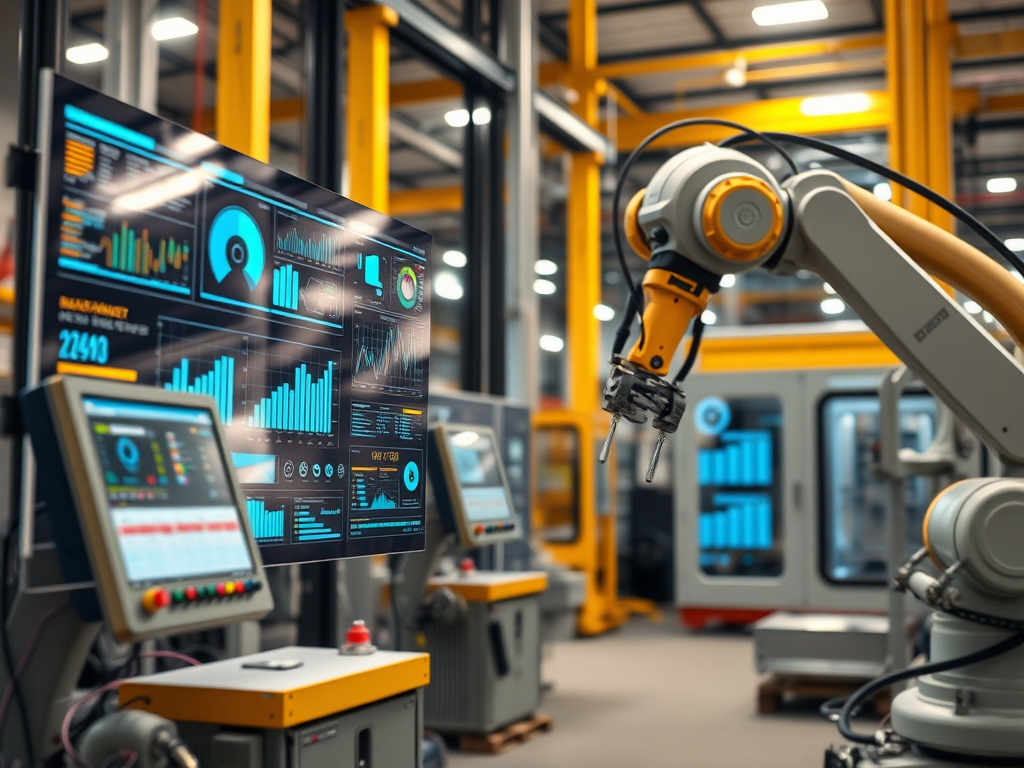
If I could summarize the last two decades of my work in manufacturing, it would be this. I’ve watched factories move from isolated automation islands to increasingly connected, data-driven environments. Along the way, I’ve seen Industrial IoT platforms promise a lot. Some deliver real value. Others struggle once you leave the slide deck and step onto the plant floor.
As we head into 2026, many teams are asking the same question. Which IIoT platforms actually make a difference in real factories?
This is not a ranking. It’s a view based on projects across pharma, automotive, food, metals, and process industries. What follows reflects what I’ve seen work, what breaks under pressure, and why some platforms scale while others stall.
Why IIoT Platforms Matter. And Why Choosing One Is Hard
Every plant wants the same outcome. Get data out of machines, make it useful, and do it securely.
The challenge is that no two plants are the same. Some are full of legacy PLCs from the 1990s. Others run modern robots and edge gateways. Some must meet strict GxP and audit requirements. Others focus purely on uptime and throughput.
Because of that, the “best” IIoT platform is rarely about features alone. Fit matters more. Fit with your existing automation, your IT landscape, your compliance constraints, and your team’s skills.
That’s why I’ve seen smaller or less hyped platforms outperform market leaders when they align better with real operational needs.
IIoT Platforms That Are Shaping 2026
Siemens Insights Hub (MindSphere and Industrial Edge)
Siemens continues to show up in large, multi-site manufacturing programs. The strength of their platform is how well it handles industrial data at scale. Real-time signals, asset models, KPIs, and performance comparisons are well supported out of the box.
Where it works best is in environments already running Siemens automation or MES. Integration is smoother, and the edge-to-cloud story is mature. The tradeoff is complexity. Licensing and architecture decisions require care. Still, for large operations, Siemens is hard to ignore.
AVEVA CONNECT and the PI System
AVEVA remains the backbone historian platform in many plants. CONNECT builds on that foundation by bringing cloud-native analytics, visualization, and integration across MES, SCADA, and ERP data.
I’ve seen strong results in regulated industries, including food & beverage and pharma, where data lineage and reliability matter. The ecosystem around AVEVA is large and growing, with integrations into platforms like Snowflake and Databricks.
PTC ThingWorx
ThingWorx shines when speed matters. Its model-driven development approach makes it possible to build custom applications quickly, from predictive maintenance to digital work instructions.
I’ve seen it work especially well in discrete manufacturing and pilot-to-scale journeys. The flexibility is a strength, but it comes with a learning curve. Success usually depends on strong collaboration between IT and OT teams.
ABB Ability Genix
Genix is well suited for complex, asset-heavy industries. It focuses on contextualizing data across OT, IT, and engineering layers, then applying analytics and AI to improve reliability and energy efficiency.
In large plants, it brings order to fragmented data landscapes. Deployment options are flexible, including cloud, hybrid, and on-prem. The platform provides tools. Domain expertise is still required to turn insights into action.
Rockwell Automation FactoryTalk
FactoryTalk is Rockwell’s Connected Enterprise vision in practice. It focuses on bridging plant-floor data with business systems while maintaining strong ties to Rockwell controls.
FactoryTalk Optix stands out for cloud-enabled HMI and SCADA, combined with edge computing for low-latency use cases. It fits naturally in Rockwell-heavy environments and is becoming more open over time.
Schneider Electric EcoStruxure
EcoStruxure connects devices, systems, and cloud services with a strong emphasis on energy management and sustainability.
I’ve seen it used to monitor assets, reduce energy consumption, and connect mixed automation environments. The modular design allows teams to start small and scale gradually. For sites with diverse equipment and sustainability goals, it can be very effective.
Software AG Cumulocity IoT
Cumulocity is often overlooked, but it’s quietly effective. It offers fast deployment, strong device management, and real-time analytics without heavy infrastructure overhead.
I’ve seen it work well for OEE monitoring, predictive maintenance, and remote asset management. It’s cloud-agnostic, which appeals to global organizations avoiding vendor lock-in. A good integration partner makes a big difference here.
Ignition by Inductive Automation
Ignition has gained serious momentum over the last few years. It’s open, modular, and priced in a way that encourages experimentation. Unlimited tags, clients, and connections remove many traditional barriers.
I’ve seen sites that started with a simple dashboard and ended up building full Unified Namespace architectures on Ignition. It connects easily via OPC UA, MQTT, SQL, and REST. In my opinion, if flexibility and control matter to you, Ignition is one of the strongest options available.
AWS IoT SiteWise
SiteWise is built for scale. It models assets, collects time-series data, and supports KPI calculation at the edge or in the cloud.
Its biggest advantage is managed infrastructure. No servers to maintain, easy integration with other AWS services, and strong security features. The caveat is clear. You need solid OT knowledge and a clear cloud security strategy to avoid disappointment.
Microsoft Azure IoT Operations (AIO)
Azure IoT Operations is Microsoft’s cloud-native approach to industrial connectivity. It focuses on standardizing data models, managing edge environments, and enabling advanced analytics and AI.
It integrates tightly with Azure services like Power BI, Synapse, and Digital Twins. The security and compliance story is strong, which matters in regulated industries. OT integration still requires effort, but for Microsoft-centric organizations, AIO can bridge plant and cloud effectively.
What’s Changing as We Move into 2026
Several trends are becoming clear.
AI is everywhere, but value comes from clean, contextualized data, not models alone. Edge computing is growing, driven by latency, reliability, and data residency requirements. Security and compliance are no longer optional. Many projects fail late because these were treated as afterthoughts.
Another shift is less technical. Platforms that support organizational change, not just data collection, tend to last longer.
Final Thoughts
No IIoT platform will fix broken fundamentals.
I’ve seen companies invest heavily in technology and end up with dashboards no one trusts or uses. Start with data quality, cross-team alignment, and clear outcomes. Then choose the platform that fits that reality, not the one with the loudest marketing.
Also, there is no single “best” IIoT platform for 2026. The right choice depends on your landscape, your people, and your goals.
The platforms above are not perfect, but they are making real impact in real factories. If I had to give one piece of advice, it would be this. Focus on openness, scalability, and speed from pilot to production. And never underestimate the role of strong integrators and internal champions.
That’s usually where success is decided.
Leave a Comment