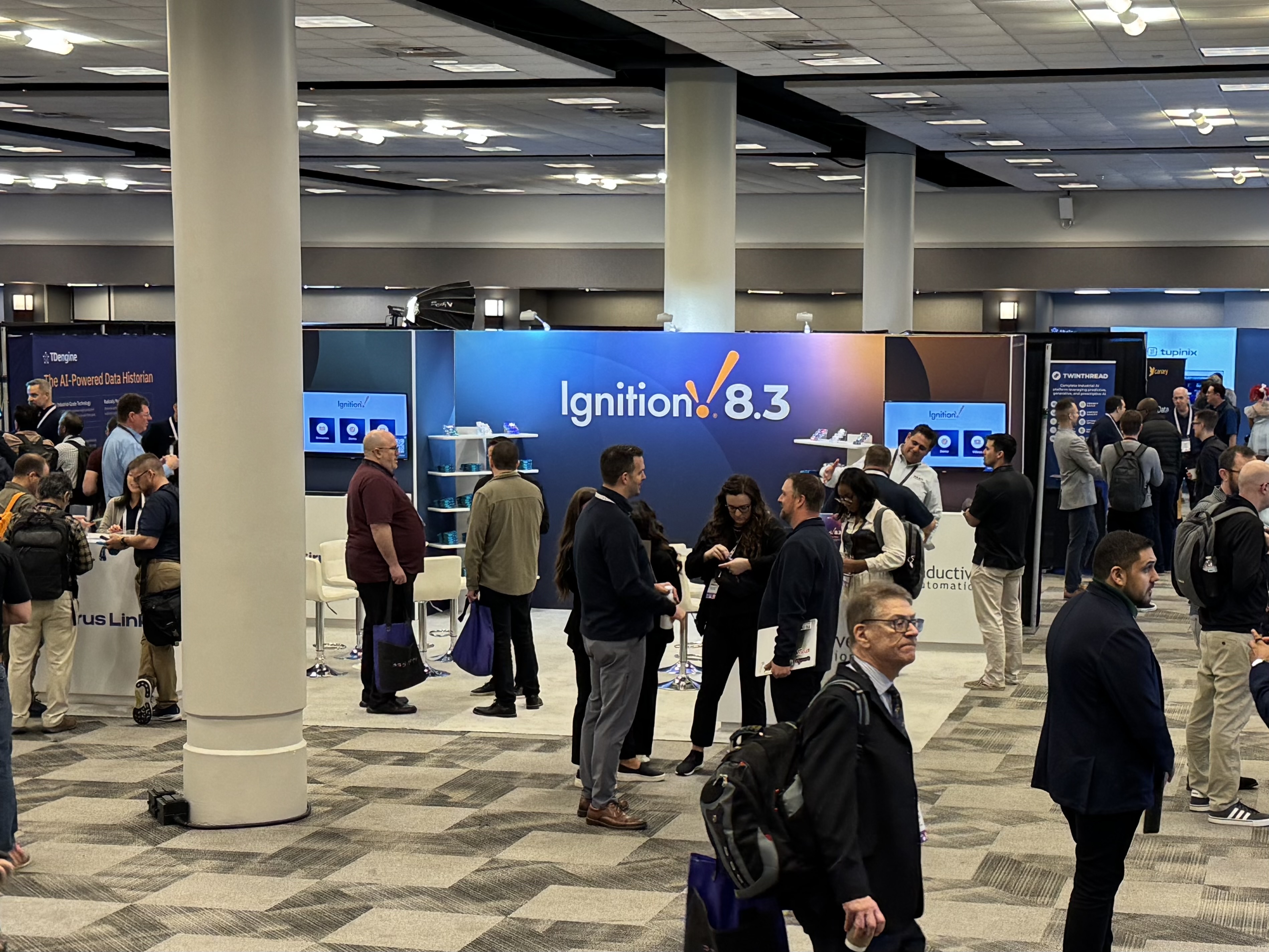
I have been to a lot of manufacturing events over the years. Some are useful. Some are basically a sales funnel with better coffee.
This one felt different.
What I liked most is that the conference actually tried to prove something. Not in a “look at our roadmap” way. In a “here is the architecture. Here is the data flow. Here is the math. Here is what broke the first time we tried it” way.
And honestly. That is rare.
1. The vibe was practical, not performative
The best sessions were the ones that stayed close to plant floor reality.
Not “AI will change everything.” More like:
- “Here is the business problem we picked.”
- “Here is the minimum set of signals we needed.”
- “Here is how we got data out of the controls layer without making operations hate us.”
- “Here is what we stored. Where. And why.”
- “Here is what we would do differently next time.”
That practical tone matters. Because in manufacturing, the thing that kills your program is never the slide deck. It is the last 10 feet. The part where you have to connect to an old asset, deal with network rules, validate changes, and still keep the line running.
2. The Unified Namespace talk stayed grounded
A lot of people talk about a Unified Namespace like it is magic.
This conference treated it more like what it really is. A discipline.
What I appreciated is that the better conversations were not about tooling. They were about consistency:
- naming conventions that humans can live with
- event structures that do not collapse under “just one more tag”
- who owns the model
- what “good enough” looks like for the first site, so you can actually scale
My not popular opinion. Most teams do not fail at UNS because of technology. They fail because they do not want to do the boring governance work first. Then they build dashboards on top of chaos and call it transformation.
3. Real ROI examples, with real numbers
One of the strongest patterns I saw was a focus on small, measurable wins.
Not “connect the whole factory.” More like:
- pick one line
- pick one form of waste
- instrument just enough signals
- calculate the cost in plain language
That approach is how you survive year one.
Plants do not need another platform to maintain. They need a short list of problems that are worth solving, with proof that the solution pays for itself.
4. The architecture mindset was healthy
Another thing I liked. The event reinforced the idea that you do not have to buy one giant system and force it everywhere.
The better stories leaned toward a composable stack:
- connect and collect at the edge
- publish clean events
- store data in a system you can operate
- visualize and execute where it makes sense
- build in a way your internal team can actually own
That “own it like a product” mindset is the difference between a pilot and a program.
5. People were open about what is hard
I heard more honesty than I expected.
Stuff like:
- “We underestimated onboarding and training.”
- “We had to simplify our data model.”
- “Security reviews took longer than the build.”
- “Operations did not care until we tied it to a loss they feel every day.”
Those are the conversations that help other teams move faster. Because they are real.
Closing thought
My overall feedback is simple.
This conference respected the audience. It assumed people in the room have to go back to a plant and make it work. That shows up in the content, the examples, and the tone.
Anyway. I left with more than ideas. I left with a clearer picture of what “good” looks like for practical IIoT execution, and a few reminders about what not to skip if you want to scale.
This post reflects my personal opinions based on sessions I attended at ProveIt! Conference 2026.
I am not affiliated with the event organizers, and this content is not sponsored.
Event organization: proveitconference.com
Leave a Comment