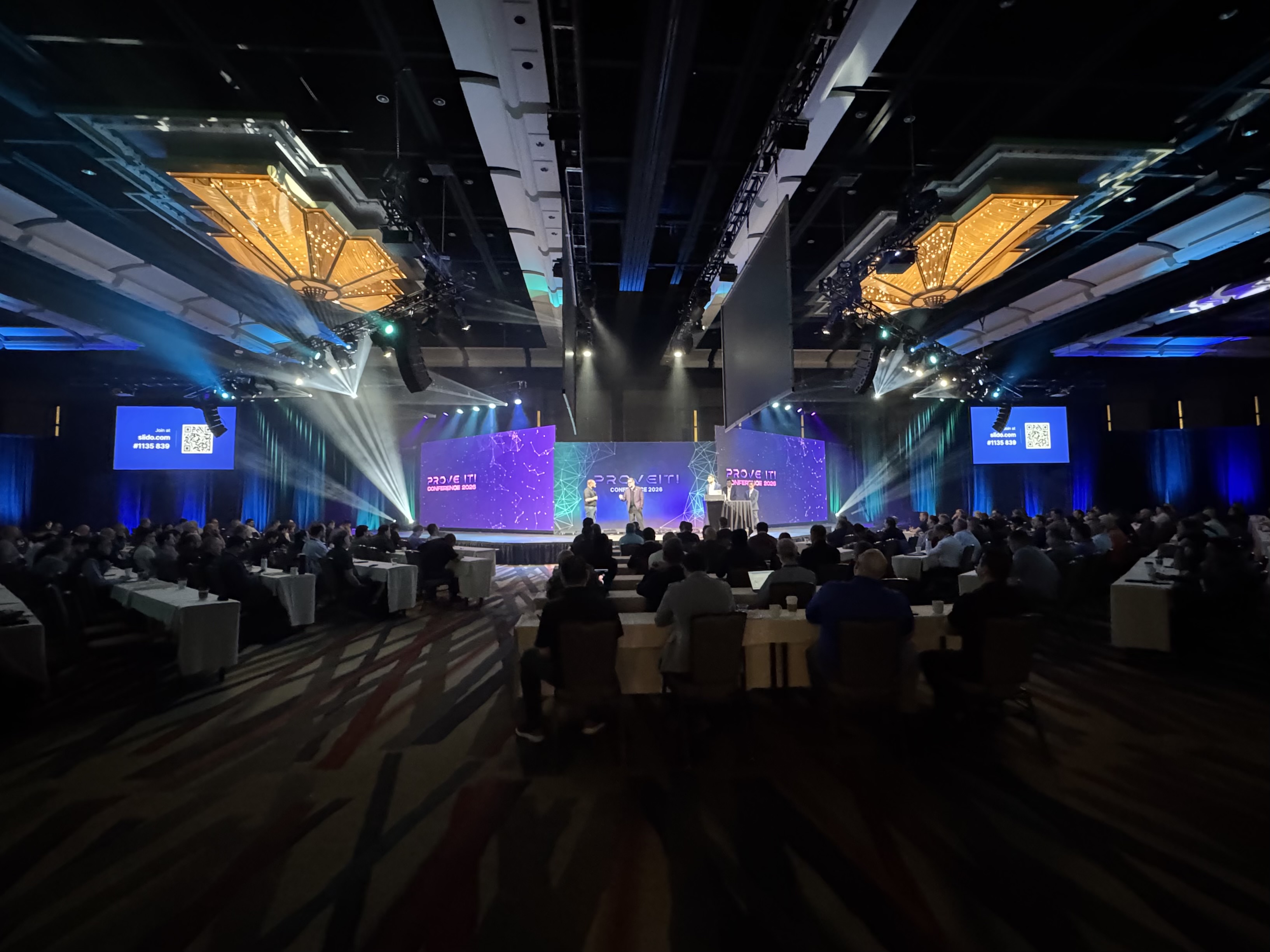
At ProveIt! Conference 2026, I sat through a session that felt more like a plant-floor working session than a tech pitch.
It was framed as a live, fictionalized case study. The company was Cappy Hour Bottling. The names were fictional. The pattern was not.
The storyline stayed focused on one thing. Cost reduction. Not a transformation vision. Not a giant platform rollout. Just margin, waste, and time pressure.
The session was a joint narrative led by Abelara, Tupinix, and Axilon. Each had a clear role.
- Abelara as the vendor-neutral architecture and strategy partner
- Tupinix as the hands-on Industry 4.0 and OT integration team
- Axilon as the DevOps and AI enablement layer around an Ignition-based stack
That clarity is what made the story believable.
One company. One problem. One clock ticking.
In the scenario, the CEO of Cappy Hour Bottling was under pressure. Competition was squeezing margins. If costs did not come down quickly, layoffs were on the table.
No dramatic villain. No “culture problem.” Just a situation most plants recognize.
- Finance, engineering, operations, maintenance, and supply chain each had their own systems.
- Each team had a valid way of working.
- The issue was that the data was not connected.
Because the data was fragmented, nobody could see cost impact in real time.
So they picked one leak. Waste on a bottling line.
That was it. Not enterprise transformation. Not multi-year MES replacement. One line. One measurable problem.
Phase 1. Abelara sets the rules
Abelara entered first. In the story, they ran a one-week workshop.
Their message was consistent.
- Stay vendor-neutral in architecture thinking.
- Do not default to a monolithic platform.
- Stitch together the right components for the problem.
- Define ownership early.
The deliverable was not a shopping list. It was a roadmap tied directly to cost reduction.
They pushed a simple but uncomfortable idea.
Every system is a product. Someone inside the business must own it.
My opinion. If ownership is not defined from the beginning, the solution quietly becomes an outsourced product forever. That is not strategy. That is a recurring invoice.
Phase 2. Tupinix proves the waste with numbers
Tupinix took the first use case and implemented it at a single site.
The approach was practical.
- Install an industrial PC
- Deploy Litmus Edge
- Connect to PLCs and drives
- Collect bottle counts, scrap, reject counts, and flow meter data
Then they did the part that matters. They translated process signals into money.
They also mentioned what I have seen in real facilities. Once overfill is reduced, packaging and shipping can sometimes be tightened. In their story, it enabled fitting one additional pallet per truck. That is the kind of improvement that appears after you stop leaking product.
Phase 3. Scale without creating a mess
After the quick win, the session moved to scaling.
The stack described was grounded and familiar:
- Litmus for connect, collect, and store at the edge
- Ignition for visualization and MES-style workflows
- PostgreSQL as the database layer
- A Unified Namespace approach as the shared data backbone
- Fuse for SAP integration
- DevOps enablement via Axilon
I am not anti-Microsoft SQL. I have used it often. But I am strongly pro simplicity when scaling across multiple sites. The database is rarely the make-or-break decision. The real question is whether you can operate, deploy, roll back, and standardize safely.
If you cannot do that, the tool list is trivia.
Axilon. Speed with governance
Axilon’s segment focused on internal enablement.
In the scenario, a plant engineer needed better downtime classification. Instead of opening tickets with an integrator for every small enhancement, they used Axilon.
That was the moment the session shifted from a sales pitch to a lesson.
Speed without governance is chaos. Governance without speed creates backlogs that never die.
The goal is not “go live.” The goal is to make the plant capable of improving the solution without waiting in a ticket queue.
Practical takeaway
Many conference talks hide behind architecture diagrams.
This session at ProveIt! Conference 2026 at least showed the order of operations.
If you start with enterprise standardization before proving a single use case with dollars attached, you will burn a year in workshops and politics.
If you start with one line, one leak, and one measurable win, you earn the right to standardize later.
Abelara did not sell software. They sold clarity and trade-offs.
Tupinix proved value with real OT signals and real financial impact.
Litmus Edge and Ignition were positioned as practical building blocks, not ideology.
Axilon focused on internal capability instead of dependency.
The Unified Namespace was present, but ROI was the headline.
And here is the blunt version.
If the plant cannot change the system without opening a ticket with a system integrator, the plant does not own the system.
For a conference session, that was refreshingly grounded.
This post reflects my personal opinions from sessions I attended at the ProveIt! Conference 2026.
I am not affiliated with the companies mentioned, and this content is not sponsored. Company names and trademarks belong to their respective owners.
Companies referenced: abelara.com, tupinix.com and axilon.com

Leave a Comment