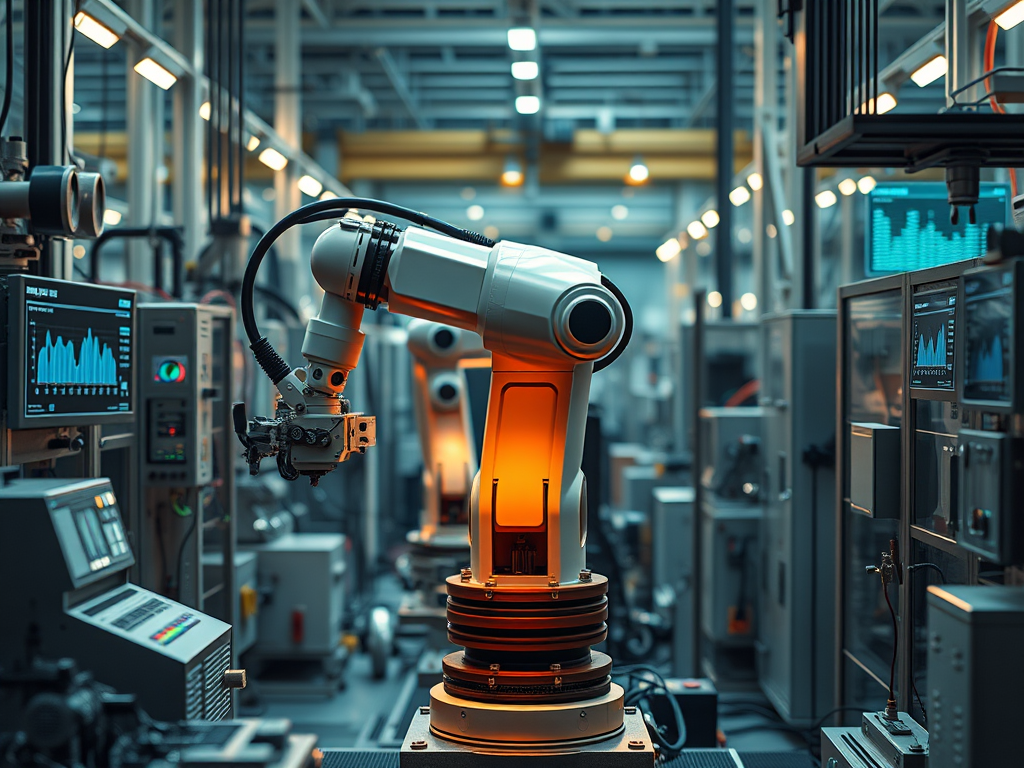
AIoT. Artificial Intelligence combined with the Internet of Things. It is no longer just a buzzword. It is quietly changing how plants, labs, and production lines operate.
I have spent more than two decades connecting machines, systems, and people across manufacturing environments. Pharmaceuticals, automotive, and several others. Over the years we wired together PLCs, SCADA systems, historians, MES platforms, and lab systems that were never designed to talk to each other. Then cloud platforms arrived. MQTT brokers followed. Event streams, dashboards, and data lakes came next.
Now AI is entering the picture.
So when people talk about AIoT-driven autonomous manufacturing, my reaction is usually the same. Interesting idea. But autonomy is earned. It does not appear just because someone installed a machine learning model.
What actually works in plants and labs is much more practical, and sometimes much less glamorous, than what appears in vendor presentations.
What AIoT-Driven Autonomous Systems Actually Mean
At its core, AIoT simply means combining connected machines and sensors with intelligent software.
Sensors collect data. Machines publish telemetry. AI models analyze patterns and make decisions.
In some cases the system only alerts people. In other cases it assists with recommendations. In more advanced scenarios it can act automatically within defined limits.
A robot arm may detect its own mechanical degradation and schedule maintenance. A quality system may identify a bad batch before it leaves the line. A manufacturing process may adjust parameters automatically when sensor feedback shows drift.
The goal is simple. Less firefighting. Faster insight. Smarter decisions.
But getting there requires discipline in the details.
Autonomy Starts with Boring Plumbing
Most discussions about AI focus on models and algorithms. In real plants and labs, the hardest part is still data reliability.
If equipment tags change names after every shutdown, if timestamps drift between systems, or if an edge gateway reboot creates gaps in your telemetry stream, your autonomous system will fail quickly.
What helped us repeatedly were a few simple but critical foundations.
A consistent namespace. Everyone refers to the same asset and signal in the same way.
Edge buffering. Short network disruptions should not create permanent holes in the data stream.
Continuous data quality checks. Not just during commissioning. Always running.
My honest opinion is simple. If your data pipeline cannot survive a normal Tuesday in the plant, you are not ready for autonomy on Friday.
Where AIoT Is Already Delivering Value
Predictive Maintenance and Operational Efficiency
Predictive maintenance is usually the first successful AIoT application.
Sensors track vibration, temperature, or motor current. Machine learning models identify patterns that indicate wear or degradation.
I have seen robotic arms on high speed production lines equipped with these models. Subtle changes in vibration or heat profiles were detected weeks before a mechanical failure.
Instead of waiting for a breakdown, the system flagged the issue and maintenance was scheduled during planned downtime. In one case, catching the decline of a single robotic arm early prevented more than a million dollars in lost production.
This is not theory. It is operational reality.
Quality Control and Defect Detection
Quality control is another strong use case.
Vision systems and checkweighers connected through IoT platforms can inspect every unit on a line instead of relying on random sampling.
AI models learn from previous inspections. Over time they become better at distinguishing acceptable variation from real defects.
I have watched production lines move from roughly 95 percent detection accuracy to almost complete coverage. Fewer defects leaving the line means fewer recalls, fewer investigations, and less operational stress.
Real-Time Monitoring and Traceability
In pharmaceutical environments, traceability is critical. IoT sensors continuously monitor environmental conditions such as temperature and humidity. They also capture operational context like machine state or operator actions.
AI models help identify abnormal trends early. A temperature drift inside a cold storage area can be detected before a batch is compromised.
Serialization and supply chain monitoring technologies are also improving traceability and helping detect counterfeit products. This matters deeply in regulated industries where patient safety is involved.
Autonomous Process Optimization
The most interesting applications appear in continuous manufacturing.
Instead of following a static recipe, the process continuously adapts based on real time sensor feedback.
If pressure changes slightly, the system may adjust flow rates. If product characteristics drift, the control parameters can be tuned within safe limits.
That is where autonomy becomes real. The system is not just observing the process. It is actively improving it.
Start with Detection. Not Automation
Many organizations try to jump directly to full autonomous control.
In most manufacturing environments, and especially in regulated industries, that approach usually fails.
A more practical approach is a maturity ladder.
Step A. Detect. The system identifies that something is abnormal.
Step B. Diagnose. It estimates the most likely cause.
Step C. Recommend. It suggests what action should be taken.
Step D. Assist. It executes safe parts of the workflow.
Step E. Autonomously act. The system performs the action with guardrails and traceability.
Even the first step can deliver enormous value.
Detecting abnormal machine cycles, drifting setpoints, or sensor failures already saves engineers hours of investigation.
Small Autonomous Loops Create the Biggest Wins
The most successful systems I have seen were not massive programs claiming to automate entire factories.
They were small autonomous loops that solved real operational problems.
Examples include automatic ticket creation when an edge node stops publishing data for a defined period. Automatic fallback from one communication path to another when connectivity fails. Data triage systems that identify which signals changed before a downtime event.
Predictive maintenance systems also benefit from combining multiple signals before triggering a work order. A single noisy vibration reading should not create unnecessary maintenance. But when several indicators agree, the system can act with confidence.
None of this looks impressive on a marketing slide. But it reduces chaos in daily operations.
Real-World Challenges That Slow AIoT
Legacy Systems and Data Integration
Most plants are not greenfield environments.
AIoT platforms must integrate with decades old PLCs, historians, and MES systems. Mapping those systems into a consistent data model is difficult.
Unified Namespace architectures can help. But aligning naming conventions and asset hierarchies across legacy systems often takes longer than expected.
In regulated industries, every integration can also trigger validation and compliance reviews.
Organizational Silos
Technology is rarely the biggest barrier.
IT teams worry about cybersecurity and data governance. OT teams prioritize uptime and deterministic control.
AIoT sits directly between these domains. Without strong collaboration between them, projects stall or remain stuck in pilot stages.
The most successful initiatives create hybrid teams that include production engineers, IT architects, and data scientists working together.
Validation and GxP Compliance
In regulated industries like pharmaceuticals, validation is essential.
AI models can evolve over time as new data arrives. That creates challenges for traditional software validation processes.
Regulators expect explainability, traceability, and documented control over system behavior.
Many organizations therefore deploy AI first in advisory or decision support roles before allowing full automation.
Event-Driven Data Architecture
Technologies like MQTT and Kafka enable real time streaming at scale. But they also amplify poor design decisions.
If teams fail to define consistent topic structures, event schemas, and error handling strategies early, the platform becomes fragile and difficult to maintain.
Some organizations collect enormous volumes of data but still struggle to extract meaningful insights. The problem is rarely the volume of data. It is the lack of structure.
Sometimes the Best Autonomy Is Not Automation
Not every process should be automated.
If the cost of a wrong action is extremely high, or if the process state is difficult to observe reliably, advisory systems may be the best option.
AI can still reduce workload by highlighting anomalies, gathering evidence, or summarizing operational data.
But the final decision remains with a human operator.
This approach may not generate flashy headlines. But it builds trust and protects critical operations.
Final Thought
AIoT will continue to make manufacturing and laboratories smarter and more connected.
But the real breakthroughs will likely be quiet ones.
Systems that reduce the number of times engineers need to hunt for data. Platforms that detect issues earlier. Tools that eliminate repetitive coordination work.
When those foundations are in place, autonomy stops feeling risky.
It simply feels like the plant became a little more helpful.
Leave a Comment