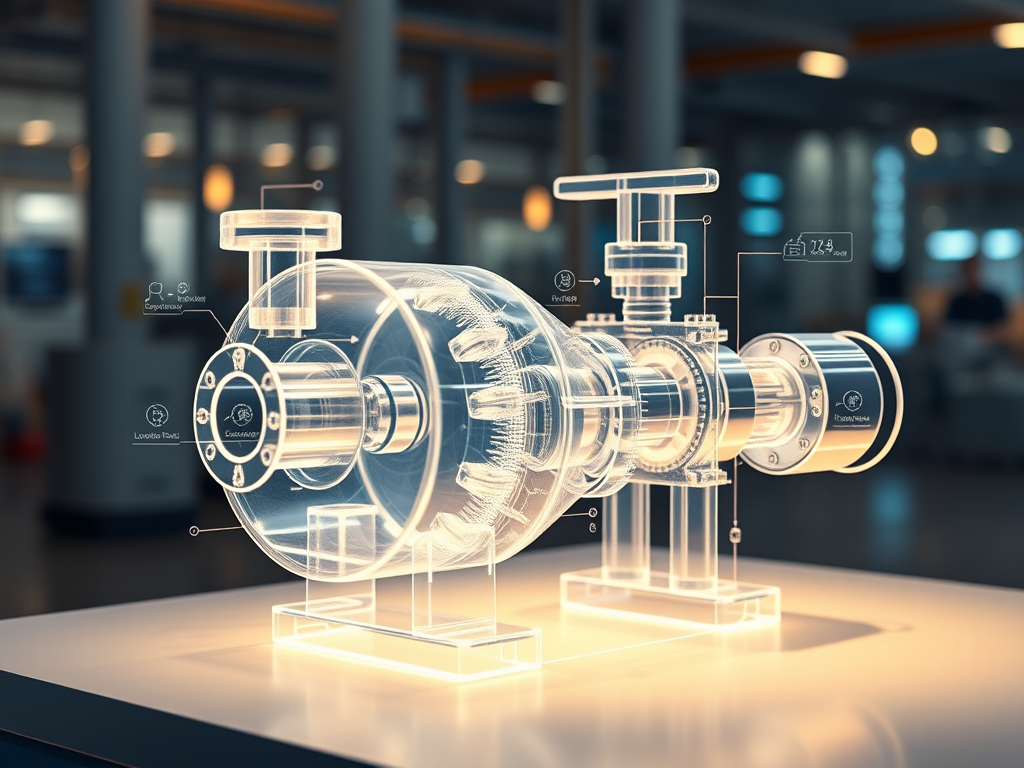
A lot of confusion around digital twins comes from one simple thing. People mix up the twin itself with the models inside it.
They are not the same.
A digital twin is a structure. A container that connects data, context, and models to represent a real asset or process.
A physics-based model is one way to make that twin behave intelligently.
So a simple way to think about it:
The digital twin is the environment.
The models are the brains.
Once you separate these two, the rest becomes much clearer.
What a Digital Twin Really Is
A digital twin is a live representation of something physical.
It can be:
- A pump
- A production line
- A reactor
- Part of a plant
It connects to real systems like PLCs, SCADA, MES, or historians, and stays updated with real-time data through IIoT.
But here is the important part.
A digital twin by itself does not think.
If you only connect data and display it, you have a structured dashboard. Useful, but limited. The value comes when you add logic or models that interpret the data and support decisions.
That is when it becomes more than monitoring.
What “Physics-Based” Means in Practice
A physics-based model is math that respects how the process behaves.
Things like:
- Conservation of mass
- Energy balances
- Pressure and flow relationships
- Heat transfer
- Equipment curves
These are not new ideas. Engineers have always used them. The difference now is that they are connected to live data.
In IIoT terms, this means combining:
- Real-time signals like flow, pressure, temperature, speed, vibration, power
- Static information like equipment limits, design data, product assumptions
- A model that estimates what you cannot measure directly
This is where the real value starts. Plants are full of important variables that are not measured well.
Digital Twin Without Models vs With Models
This is where the confusion usually disappears.
Digital twin without models
- Shows real-time data
- Displays trends and dashboards
- Helps with visibility
Digital twin with models (like physics-based)
- Explains what is happening
- Detects when something is wrong
- Estimates missing values
- Simulates future scenarios
- Supports decisions
The twin gives structure.
The model gives meaning.
Where Physics-Based Models Actually Help
Across different environments, physics-based models tend to work well in a few clear situations.
1) Filling Gaps in Instrumentation
Not everything is measured. Some sensors drift or fail.
A physics model can estimate missing values and act as a sanity check. It does not replace instrumentation, but it helps detect when something is off.
2) Enforcing What Should Happen
Many processes follow known relationships.
For example:
- A valve change should impact flow and pressure
- Speed should impact power
- Heat input should impact temperature
You do not need to guess. Physics already defines these relationships.
This is useful for constraint monitoring and abnormal behavior detection.
3) Supporting Decisions with Explanations
In regulated or safety-critical environments, explanations matter.
A model that shows cause and effect builds trust. Even if it is not perfect, it is understandable.
4) Running What-If Scenarios
This is where digital twins become very practical.
You can simulate:
- Process changes before execution
- Maintenance strategies
- Different operating conditions
Without touching the real system.
This reduces risk and improves planning.
Where It Usually Goes Wrong
Most failures come from misunderstanding the roles or skipping fundamentals.
1) Trying to Model Everything
People aim for the full plant twin.
In reality, useful twins are small and focused. Built around one asset, one line, or one problem. If you try to do everything, nothing gets finished.
2) Confusing Real-Time with Quality
Fast data is not good data.
If naming is inconsistent, units are unclear, timestamps drift, or signals are not validated, the model becomes unreliable.
3) Overpromising Accuracy
Physics-based does not mean perfect.
If inputs are wrong or assumptions are weak, outputs will also be wrong. Sometimes very confidently wrong.
4) Ignoring Data and Instrumentation
A strong opinion here. Most plants should invest more in:
- Sensor quality
- Calibration discipline
- Data context and structure
Before investing in advanced models.
It is less exciting, but it pays off.
5) Forgetting Model Ownership
Plants change constantly.
If no one owns the model and updates it, the twin slowly loses relevance. Then people stop using it.
A Practical Way to Start. The Minimum Useful Twin
If you want something that actually gets used, start small.
Pick one pattern:
- A virtual sensor
- A constraint monitor
- A what-if simulation
Then define clearly:
- Inputs. Which signals, at what frequency
- Assumptions. Units, filters, missing data handling
- Outputs. What people will use
- Validation. Compare with real data
- Ownership. Who maintains it
If you cannot name the owner, it will not last.
Data Foundation. Why UNS and Event-Driven Matter
A digital twin depends on clean and trusted data.
In practice, it works best when:
- Data has consistent context, asset hierarchy, units, states
- You subscribe to events instead of polling everything
- You can trace where each value comes from
When model outputs become just another tag without lineage, trust drops quickly.
Physics-Based and Machine Learning. Better Together
This is not a competition.
A simple and effective approach:
- Physics provides structure and guardrails
- Machine learning handles noise, drift, and complex behavior
Physics keeps the model realistic.
ML adapts to real-world variability.
But do not start with both. Start simple. Add complexity only if there is a clear need.
The Real ROI
Digital twins are not valuable because they exist.
They are valuable when they change decisions.
Examples of impact:
- Faster process scale-up with fewer physical tests
- Reduced downtime through better planning
- Improved efficiency and energy usage
- Better understanding of process behavior
If the twin becomes part of daily operations, it delivers value. If it stays as a dashboard, it becomes optional.
The Simple Takeaway
Digital twins and physics-based models are not the same thing.
The twin is the structure that connects data and context.
Physics-based models are one way to make that structure useful.
Keep the scope tight. Focus on real decisions. Respect data quality.
If you chase the perfect full-plant twin, you will mostly produce slides. If you build small, useful twins that people trust, you will see real value.
Leave a Comment