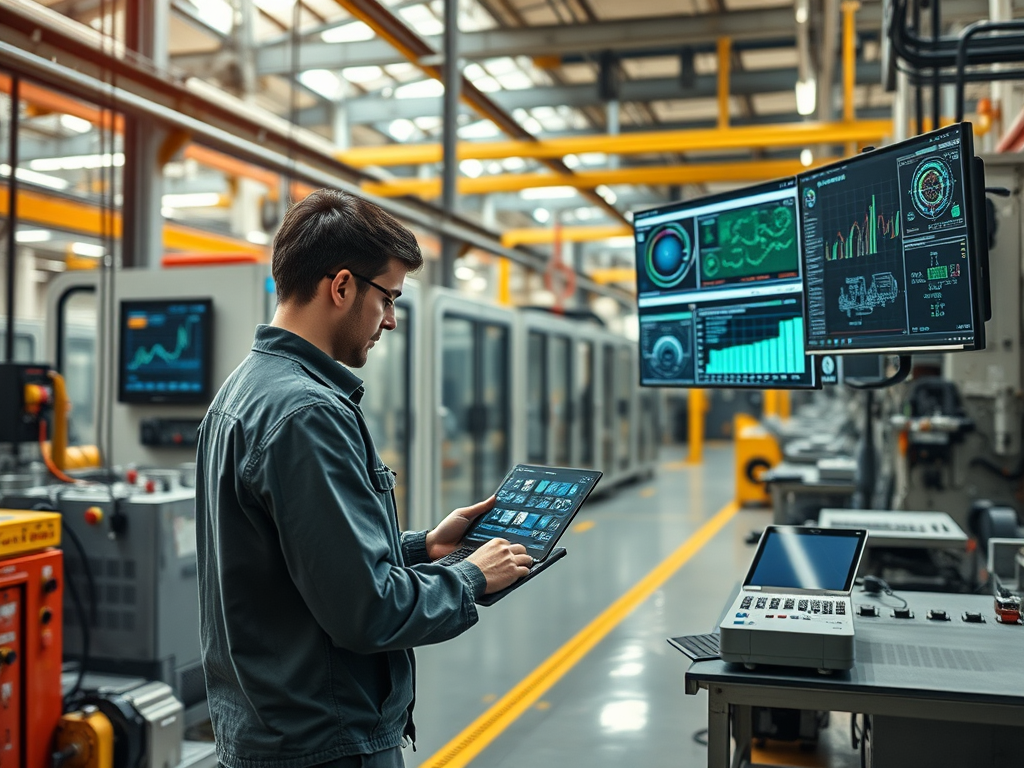
If you’d told me back in the late ‘90s that I’d end up designing IIoT architectures for global manufacturing networks, I probably would have laughed and said, “First, let me get this JavaScript working.” My path from simple websites to SAP, and then from SAP to Industrial IoT (IIoT), has been anything but straight. But it’s always been about connecting things—machines, data, and, most importantly, people.
The Early Days: Web Development
I started out building websites in the days when “dynamic” meant you’d figured out how to use a form and maybe some server-side scripting. Most of my work was for small businesses—think simple catalogs, contact forms, a bit of e-commerce before it was cool. Back then, you had to do everything: design, backend, hosting. I learned to appreciate how technology could make life easier for regular folks running a shop or a service. That’s probably where my bias for practical, no-nonsense solutions comes from.
Entering Manufacturing: SAP xMII and the Shop Floor
In 2005, I made what felt like a huge leap—from web projects to manufacturing IT. My first big step was with SAP xMII (Manufacturing Integration & Intelligence). Suddenly, I was working with data from real machines, not just databases and web forms. SAP xMII was all about bridging the gap between the shop floor and the business systems. I remember the first time I saw a live production dashboard update in real time with actual plant data—it was like magic. But it was also messy. Machines didn’t always “speak” the same language, and getting data out of a PLC or a historian could be a real pain.
I spent a lot of time figuring out how to make SAP talk to things like SCADA systems, DCS, or old SQL servers buried under layers of plant dust. It was never just about the technology. It was about understanding how operators worked, what data they trusted, and how to make their lives easier without adding more headaches. Looking back, those early SAP xMII projects taught me that the best solutions are the ones people actually use, not the ones with the fanciest architecture.
Scaling Up: Practice Leadership and Global Rollouts
From 2006 to 2018, I led Smart Manufacturing practices at a global consultancy. We weren’t the biggest player, but we learned to compete by being faster, more flexible, and closer to our clients. I built and led teams that delivered MES and integration projects across the Americas—sometimes for a single site, sometimes for dozens at once. We built templates and accelerators because we had to—nobody wanted to reinvent the wheel for every rollout.
Some of my favorite moments were on the plant floor, troubleshooting a connection to an old OPC server or explaining to a skeptical maintenance guy why his downtime data mattered to the CFO. We worked across all sorts of industries—pharma, automotive, food, metals, you name it—and every plant had its own quirks. I learned that “standard” is just another word for “starting point.”
The Shift: From SAP to IIoT
Around 2015, things started to change. Clients wanted more than just MES or dashboards—they wanted everything connected: machines, sensors, wearables, cloud analytics. That’s when I really jumped into IIoT. At first, it was about adding new layers: edge devices, MQTT brokers, real-time streaming with Kafka or Snowflake. But soon, it became clear that IIoT wasn’t just a technology stack—it was a new way of thinking about manufacturing.
We started to talk about Unified Namespace (UNS), where all data—no matter the source—could be accessed in real time, securely, and in context. I led projects to define these architectures and roll them out across global networks. It wasn’t always smooth. Legacy systems don’t like to play nice, and cybersecurity is a constant battle. But seeing a plant operator pull up real-time OEE data on a tablet, or a quality engineer use AR glasses to troubleshoot a problem remotely—that’s when you know it’s worth it.
Today: Enterprise IIoT and Real Digital Transformation
These days, I lead IIoT Architecture for a global manufacturing network. My job is to make sure every site can connect securely, share data, and comply with strict regulations (GxP, cybersecurity, you name it). We work with everything from OPC UA and SCADA to cloud platforms and AI/ML analytics. I still spend time with operators and engineers, because if the people on the floor don’t buy in, nothing sticks.
One thing I’ve learned—maybe the hard way—is that no amount of technology can fix a broken process or a lack of trust between teams. The best projects are the ones where IT, OT, and business folks actually sit down together and solve real problems.
One Honest Opinion
Here’s something that might not be popular: Most “digital transformation” talk is just that—talk. Real change happens when you get your hands dirty, listen to the people who run the machines, and make their jobs a little easier every day.
A Line That Sounds Like Me
Sometimes, after a long day with network diagrams and compliance checklists, I still miss the simplicity of building a website for a local bakery. But hey, at least now I get to connect bakeries to the cloud.
Leave a Comment