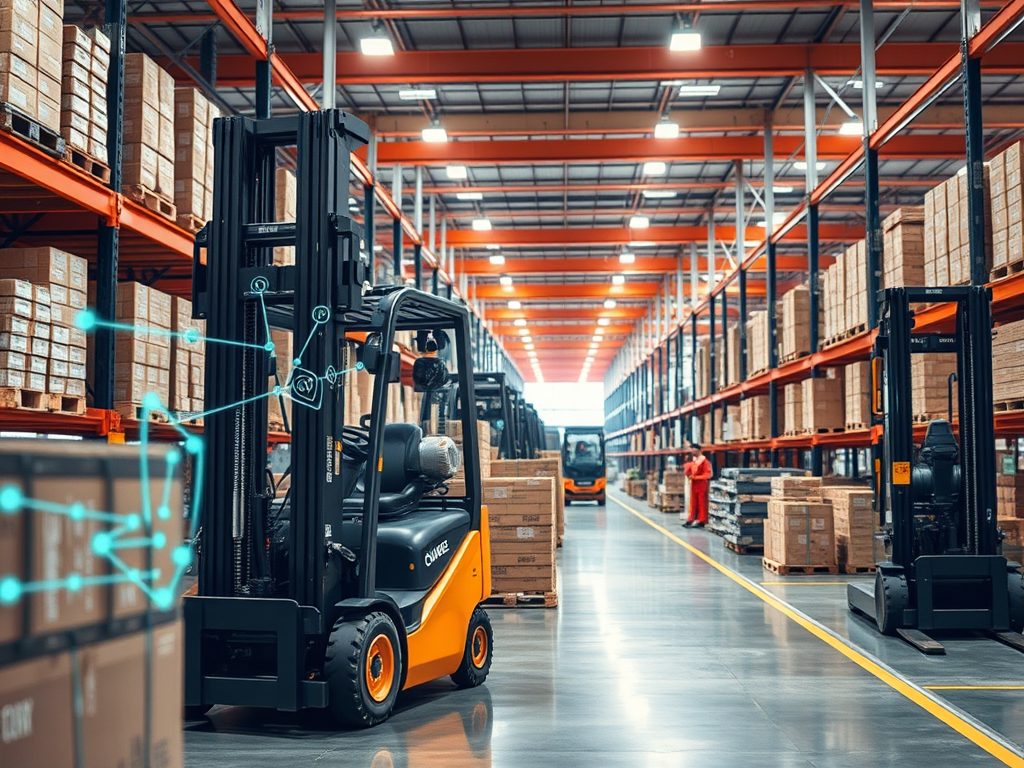
If you ask me what’s changed most in logistics over the last 20 years, I’ll tell you straight: it’s the way we connect the physical world—boxes, pallets, forklifts, people—to the digital world of data, automation, and real-time decisions. Industrial IoT (IIoT) is right at the heart of that transformation. But let me break it down through what I’ve personally seen, what worked, what didn’t, and why the “hype” actually matters when you get it right.
Why IIoT in Logistics Isn’t Just Hype
When I started out, “logistics tech” mostly meant barcode scanners, some conveyor controls, and a lot of spreadsheets. Inventory was always a little out of date. If something got lost in the warehouse, you might not know for days. Today, with IIoT, you can know where your assets are, what condition they’re in, and what’s happening in real time—across multiple warehouses, trucks, even continents.
But let’s keep it real: IIoT isn’t magic. It’s a bunch of sensors, software, and integrations that, when done right, make life easier for everyone from forklift drivers to supply chain managers.
Real Examples: What IIoT Looks Like in Logistics
1. RFID and Sensor Tracking: No More “Lost in the Warehouse”
One of the biggest pain points in logistics is losing track of stuff—finished goods, raw materials, returnable containers, even tools. I’ve seen plants where people spent hours every day just searching for missing pallets.
When we rolled out RFID-based tracking in a large manufacturing warehouse, suddenly every pallet, bin, or piece of equipment had a digital “breadcrumb trail.” RFID gates at the dock doors logged material movements automatically. Forklift drivers didn’t have to stop and scan; the system just “knew” where things were. Inventory accuracy shot up, and we could spot bottlenecks (like pallets piling up in staging) before they became real problems. In one project, adding RFID reduced manual inventory checks by over 60% and cut down on lost items almost entirely.
But here’s the honest bit: RFID isn’t perfect everywhere. If you have a lot of metal or liquids, you get interference. And the cost of tags adds up, so you have to be smart about where you use them. For high-value assets or reusable containers, it’s a no-brainer. For cheap cardboard boxes? Not so much.
2. Real-Time Location and Asset Visibility
We had a project in a distribution center where forklifts used to run “blind”—no one really knew where they were unless you called the driver. By adding ultra-wideband (UWB) sensors and integrating with the warehouse management system, we could track every forklift, every pallet, every rack position in real time.
The result? We could optimize routes, avoid traffic jams, and reduce idle time. In one site, picking efficiency improved significantly. In another, we used the data to redesign the warehouse layout, shaving minutes off every order. People sometimes underestimate the value of “just knowing where things are,” but in logistics, it’s everything.
3. Automated Material Flow: Conveyor and AGV Integration
Automated conveyors and AGVs (automated guided vehicles) are nothing new, but the real value comes when you connect them with IIoT and your warehouse management system (WMS). I’ve worked on projects where SAP EWM (Extended Warehouse Management) was integrated directly with conveyor PLCs and AGV fleet managers. No more manual handoffs or paper slips—every movement was triggered, tracked, and confirmed automatically.
If a conveyor jammed, the system sent an alert and rerouted materials. If an AGV needed maintenance, it was flagged before it broke down. We could see the whole material flow, from receiving to shipping, on a dashboard in real time. That transparency meant fewer surprises, faster response to issues, and a lot less finger-pointing when something went wrong.
You can find more information about this project here: https://iiotblog.com/2025/10/16/integrating-autonomous-agvs-lessons-from-the-field/
4. Cold Chain and Environmental Monitoring
In food and pharma, keeping products at the right temperature is life-or-death (sometimes literally). I’ve helped set up cold chain monitoring where IIoT sensors tracked temperature and humidity in real time—on the warehouse floor, in the trucks, even inside individual pallets.
If something went out of spec, the system sent an alert instantly, not hours later. We could prove to auditors that every shipment stayed within range, or quickly investigate if something went wrong. It’s not glamorous, but it’s critical. And it’s one of the best ways to prove the value of IIoT to skeptical quality or regulatory teams.
Connecting the Dots: Data Integration
The real power of IIoT in logistics isn’t just in the sensors—it’s in connecting data from every system into a single view. I’ve spent a lot of time designing architectures, where data from RFID, sensors, AGVs, MES, and ERP all flows into one place. This means you can build dashboards that show not just “where is my stuff?” but “is my production running on schedule?” and “do I have the materials I need for the next shift?”. It wasn’t always easy—integrating legacy systems, dealing with flaky Wi-Fi, or convincing IT to open a firewall—but once it worked, it changed how people managed the business.
Honest Lessons Learned
- People matter more than tech. The best systems fail if operators don’t trust them or find them too complicated. We always spent extra time on training, change management, and showing real-life benefits.
- Integration is hard. Every plant, warehouse, or distribution center has its own quirks. Standard protocols help, but there’s always custom work. Expect it.
- Start small, scale fast. The best IIoT projects started with a single use case (like tracking high-value assets) and grew from there. Trying to “boil the ocean” all at once never worked.
- Data is only useful if you trust it. Bad sensor data, missed scans, or integration gaps cause more headaches than you’d think. Invest in data quality checks from day one.
What’s Next?
Looking ahead, I see more convergence: AI-powered analytics, digital twins of warehouses, and even more automation. But the foundation is still solid IIoT—connecting the physical and digital worlds so people can make better, faster decisions.
If you’re starting your own IIoT journey in logistics, my advice is simple: focus on solving real problems, listen to your operators, and don’t get distracted by shiny objects. The results—less waste, fewer surprises, and a lot less stress—are worth it.
Leave a Comment